
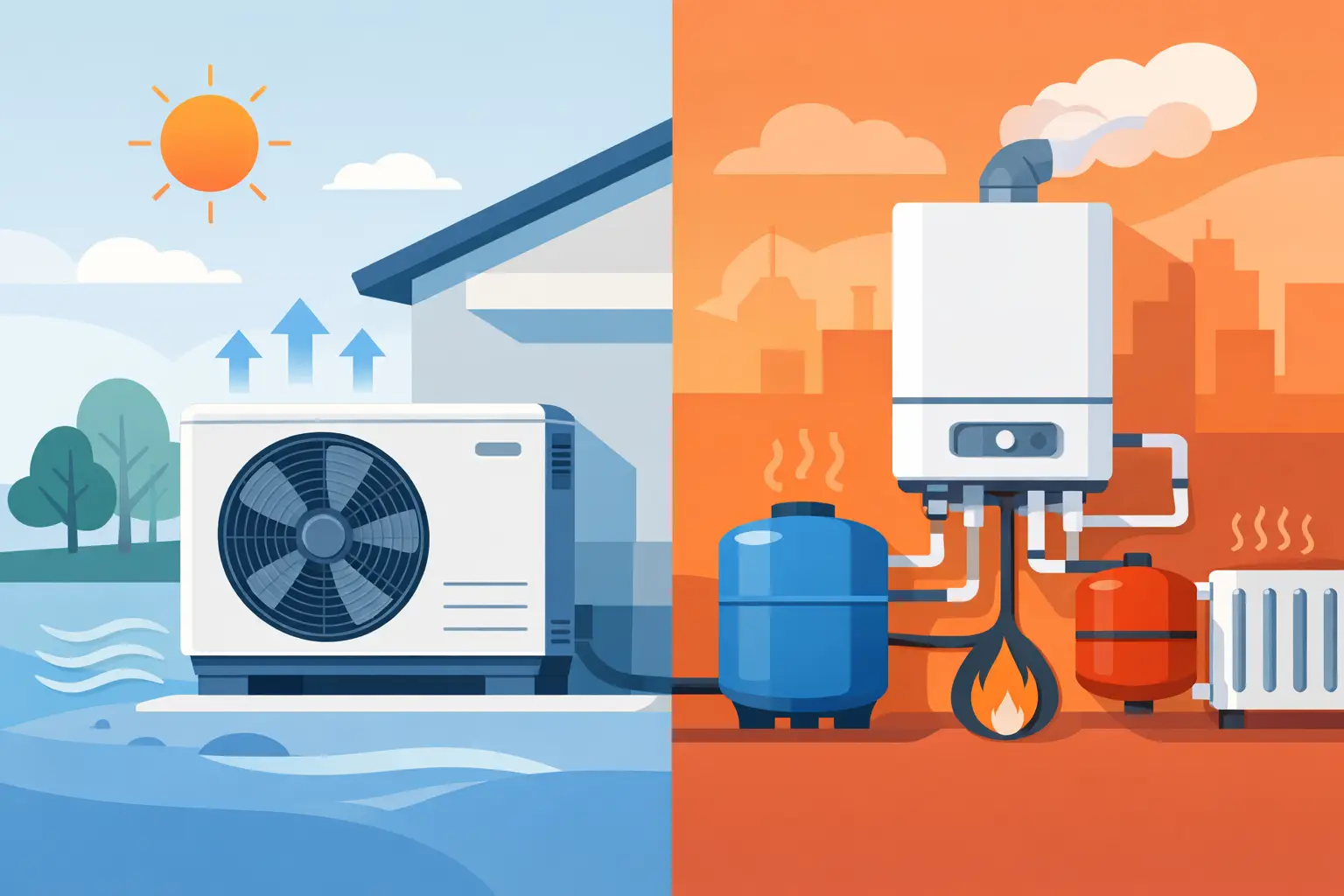
Air Source Heat Pump vs Gas Boiler
When your heating system is getting older, the question stops being academic very quickly. Homeowners across Essex are weighing up air source heat pump vs petrol boiler because the choice affects running costs, comfort, installation work and how future-ready the property will be.
There is no single winner for every home. The right option depends on the property itself, your current heating setup, insulation levels, budget and how long you plan to stay in the house. A good decision is rarely about headlines. It is about what will work reliably, efficiently and affordably in your day-to-day life.
Air source heat pump vs petrol boiler – what is the real difference?
A petrol boiler burns petrol to heat water, which is then circulated through radiators or underfloor heating and delivered to your taps. It is familiar, compact and often well suited to homes that already have a petrol connection and a conventional wet heating system.
An air source heat pump works differently. It takes heat from the outside air and transfers it into your home’s heating and hot water system. It uses electricity rather than burning fuel on site, and because it moves heat rather than creating it in the same way a boiler does, it can be highly efficient in the right conditions.
That efficiency point is where many comparisons begin, but it should not be where they end. A heat pump is not just a boiler replacement in a different box. It usually performs best when the whole heating system is designed around lower flow temperatures, good insulation and correctly sized emitters.
Upfront cost and installation work
For many households, budget is the deciding factor.
A petrol boiler is usually cheaper to install, especially if you are replacing an existing boiler with a similar model and the pipework, flue position and controls need only minor changes. In straightforward cases, disruption is limited and the work can often be completed quickly.
An air source heat pump typically costs more upfront. There is the outdoor unit itself, but also the wider system considerations. Some homes need radiator upgrades, cylinder changes, control alterations or insulation improvements to get the best from the system. The installation can still be very worthwhile, but it is usually a broader project than a standard boiler swap.
This is why clear advice matters. A low headline price on either system means very little if the installation is not properly matched to the property.
Running costs are not always as simple as they look
People often ask which is cheaper to run. The honest answer is that it depends.
Heat pumps can be very efficient, but electricity is generally more expensive per unit than petrol. Whether a heat pump works out cheaper overall depends on how efficiently it operates in your home. If the property is well insulated and the system is designed properly, running costs can be attractive. If the home loses heat quickly or the system is poorly specified, the savings may not be what you expected.
Petrol boilers are less efficient in pure energy conversion terms, but petrol prices and the way boilers deliver high-temperature heat mean they can still be cost-effective in many homes, particularly older properties that are harder to adapt.
That is why generic online comparisons can be misleading. They often assume ideal conditions. Real homes in Essex are a mix of newer builds, extended semis, Victorian terraces and rental properties with very different heating demands.
Comfort and day-to-day performance
Comfort is not just about what system looks best on paper. It is about how the house feels in January.
A petrol boiler tends to heat a property up quickly. Many homeowners are used to short bursts of higher-temperature heat, especially through standard radiators. If you want rapid response and a familiar heating pattern, a boiler often suits that expectation well.
A heat pump generally works best when it runs for longer at lower temperatures, maintaining a steady indoor climate rather than delivering quick blasts of heat. In a suitable home, this can feel very comfortable and consistent. In a poorly insulated property, it may struggle to deliver the same results without system changes.
Neither approach is wrong. They are simply different. The key is matching the system to the property and to how you live.
Which homes suit a heat pump best?
Properties with good insulation
Heat pumps usually perform best in homes with strong insulation, good glazing and low heat loss. The less heat escaping through walls, roofs, floors and windows, the easier it is for a lower-temperature system to keep the property comfortable.
Homes with enough space for the system
An air source heat pump needs outdoor space for the unit, and inside the property there may be a need for a hot water cylinder if one is not already in place. Not every home layout makes this straightforward.
Renovated or modernised properties
If you are already planning major work, such as replacing radiators, improving insulation or refurbishing the heating system, installing a heat pump can make more sense because the wider changes can be tackled together.
When a petrol boiler still makes strong sense
Older homes with higher heat demand
Many period properties and less efficient homes still suit boilers very well. If the building loses heat quickly and major fabric upgrades are not practical, a petrol boiler may offer better performance for less upfront cost.
Straightforward replacements
If your current boiler has failed and you need a reliable replacement without major alteration work, another petrol boiler is often the most practical route.
Landlord and budget-led decisions
For landlords, cost control, installation speed and tenant disruption all matter. In many cases, a modern petrol boiler remains the sensible option, particularly where the property already has petrol infrastructure and compliance is the immediate priority.
Air source heat pump vs petrol boiler for maintenance and lifespan
Both systems need professional servicing and both benefit from regular checks.
Petrol boilers require annual servicing for safety and performance. Because they burn fuel, maintenance has a clear safety dimension, and for landlords this ties directly into legal responsibilities around petrol appliances.
Heat pumps also need servicing, though the maintenance profile is different. There is no combustion process, but system performance still depends on proper setup, clean components and healthy circulation. A neglected heat pump can lose efficiency, just as a neglected boiler can lose reliability.
In terms of lifespan, either system can give many years of service when installed well and maintained properly. The installation quality matters as much as the product choice.
Environmental impact and future planning
Heat pumps are widely seen as the lower-carbon option, particularly as the electricity grid continues to shift towards cleaner generation. For homeowners thinking long term, that can be a major advantage.
Petrol boilers, while still highly practical, rely on fossil fuel. That does not mean they are suddenly the wrong choice for every property, but it does mean some households are thinking ahead to future regulations, energy policy and resale expectations.
If you are planning to stay in your home for many years and you are already improving insulation and overall energy performance, a heat pump may fit that wider direction. If you need a dependable heating solution now and your home is better suited to petrol, a boiler can still be the right answer.
The most common mistake in this decision
The biggest mistake is comparing equipment without properly assessing the house.
A boiler installed into a poorly maintained system may never perform as it should. A heat pump installed in a home with unsuitable radiators or high heat loss may disappoint the owner and damage confidence in the technology. The issue in both cases is not the concept. It is poor matching.
That is why professional advice should focus on heat demand, insulation, hot water requirements, radiator sizing, available space and realistic budget. A trustworthy installer will not push one answer for every customer. They will tell you when a heat pump is a smart investment and when a petrol boiler is the more reliable choice.
For homeowners and landlords in Essex, that practical approach matters more than sales language. Blue Flow Heating sees this decision as part of the bigger picture – keeping your property safe, comfortable and cost-effective with a system that suits the building, not just the trend.
So which should you choose?
If your home is well insulated, you are planning for the long term and you are open to a higher upfront investment, an air source heat pump can be an excellent option. If you want a lower initial cost, a faster and simpler replacement, or your property has higher heat demand, a modern petrol boiler may be the better fit.
The right answer is usually the one that works properly from day one and continues to do the job year after year. A heating system should give you confidence, not compromise. Start with the property, be honest about your budget and priorities, and the best choice usually becomes much clearer.