
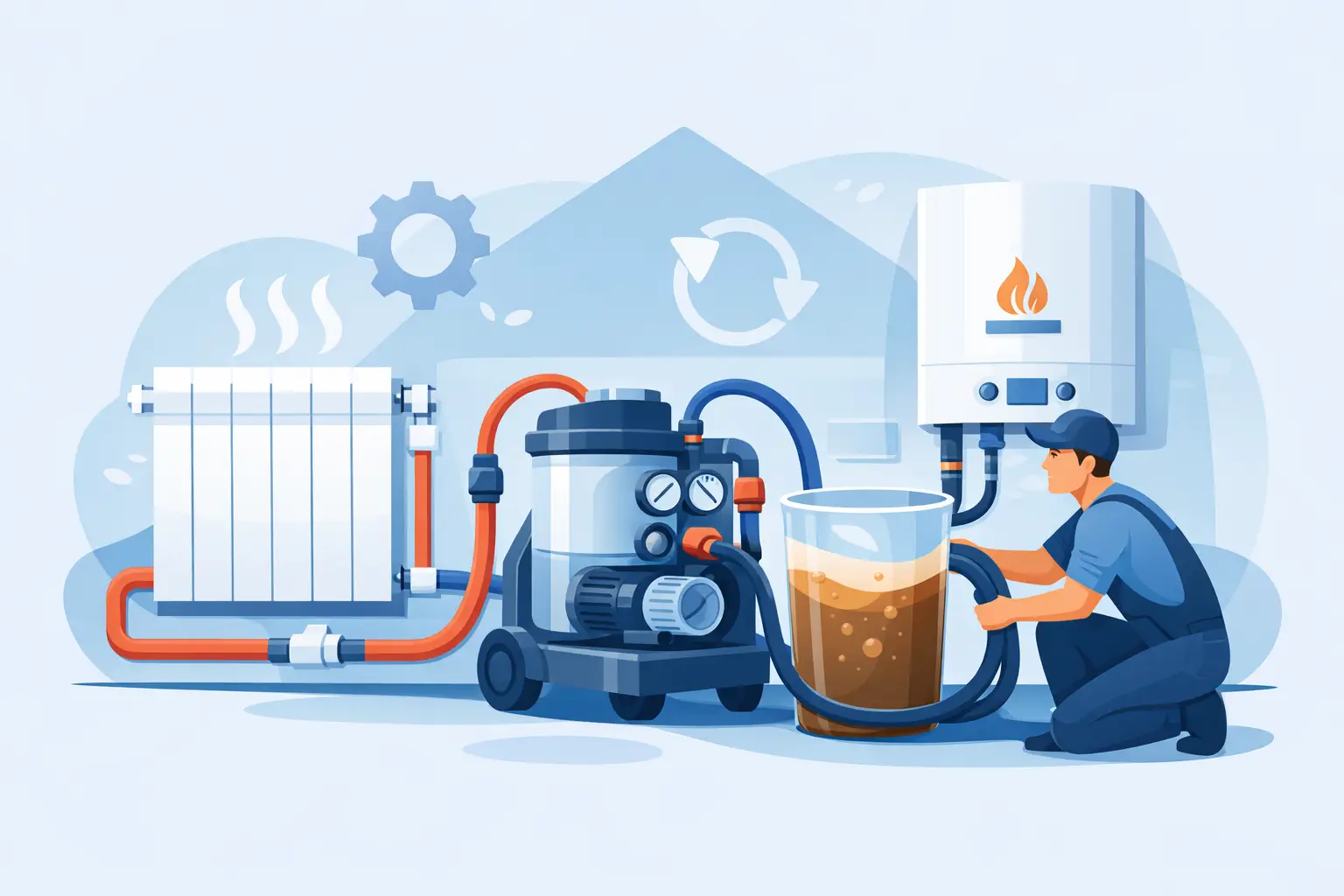
Power Flushing Central Heating System Guide
Cold radiators upstairs, noisy pipework, and a boiler that seems to be working harder than it should usually point to the same problem – sludge and debris building up inside the system. Power flushing central heating system pipework and radiators is one of the most effective ways to restore circulation, improve heat output, and protect key components from avoidable wear.
For many Essex homeowners and landlords, the difficulty is not knowing whether a powerflush is genuinely needed or whether it is being suggested as a catch-all fix. A good engineer should be clear about that. In some homes, a powerflush makes a noticeable difference to comfort and efficiency. In others, a lighter clean or targeted repair is the better option.
What is power flushing a central heating system?
Power flushing a central heating system means cleaning the internal pipework, radiators, and other heating components using specialist equipment that circulates water and cleaning chemicals at high flow. The aim is to remove magnetite sludge, rust, scale, and general debris that restrict water movement through the system.
Over time, even a well-installed central heating system can collect contamination. As metal components corrode internally, tiny particles break away and settle in radiators, valves, and low points in pipework. That buildup can leave radiators cold at the bottom, create pump strain, block heat exchangers, and reduce the overall efficiency of the heating.
A proper powerflush is not just a case of adding cleaner and hoping for the best. It is a controlled cleaning process carried out with dedicated machinery, followed by fresh water, inhibitor, and checks to make sure the system is running as it should.
Signs your system may need a powerflush
The clearest sign is uneven heating. If some radiators stay lukewarm while others get hot, or if the bottom of a radiator feels cold even when the top is warm, sludge is often involved.
You may also notice repeated boiler lockouts, banging or gurgling noises, slow warm-up times, or radiators needing frequent bleeding. In landlord properties, complaints about one room always feeling colder than the rest can point to circulation issues rather than thermostat settings.
Dirty water is another strong indicator. If an engineer drains a radiator and the water comes out black or heavily discoloured, the system is carrying contamination. That does not automatically mean a full powerflush is required, but it does mean cleaning should be considered seriously.
Why sludge in a heating system matters
Sludge is more than a housekeeping issue. It affects performance, running costs, and the lifespan of expensive parts.
When water cannot circulate freely, the boiler has to work longer to reach the same room temperature. That can mean higher energy use and more stress on pumps, valves, and heat exchangers. In modern boilers, particularly those with narrow waterways, debris can cause real damage if left untreated.
There is also the comfort issue. If you are paying to heat your home, you should not have to put up with patchy radiators and rooms that never quite warm through. For landlords, poor heating performance can quickly become a maintenance problem that tenants expect sorted properly, not patched over.
How power flushing central heating system cleaning is carried out
A professional engineer will usually start by assessing the condition of the system. That may include checking radiator temperatures, looking for cold spots, testing water quality, and identifying whether there are existing faults such as seized valves, leaks, or a failing pump.
The powerflushing machine is then connected to the heating circuit. Cleaning chemicals are circulated through the system at high flow, often with individual radiators agitated to help shift compacted sludge. In some cases, each radiator is worked through separately to clear stubborn blockages.
Once the contamination has been loosened and removed, the system is flushed through with clean water until it runs clear. Fresh inhibitor is then added to help reduce future corrosion. Depending on the system design and condition, the engineer may also recommend fitting or checking a magnetic filter to catch debris before it reaches the boiler.
The process can take several hours, and larger properties or heavily contaminated systems can take longer. That is one reason pricing varies. A quick quote without any discussion of system size, number of radiators, or condition should be treated cautiously.
When a powerflush is worth it – and when it may not be
This is where honest advice matters. A powerflush is often worth it if the system is heavily sludged, circulation is poor, multiple radiators have cold spots, or a new boiler is being connected to an older heating system with dirty water.
Boiler manufacturers also often expect the system to be cleaned properly when a new boiler is installed. If that step is skipped, debris from the old system can contaminate the new appliance and create problems early on.
That said, it is not always the right answer. If the issue is a single faulty radiator valve, trapped air, poor system balancing, or a pump that has failed mechanically, power flushing alone will not solve it. Likewise, if an old system has significant hidden weaknesses, aggressive cleaning can occasionally expose leaks that were already waiting to happen. The flush does not create the weakness, but it can reveal it.
That is why a sensible heating engineer will explain the likely outcome, the risks, and any alternatives before work begins.
What does power flushing a central heating system cost?
Cost depends on the number of radiators, the size of the property, how badly contaminated the system is, and whether extra work is needed afterwards. A small straightforward system will usually cost less than a larger home with multiple heating zones and longstanding circulation problems.
The cheapest quote is not always the best value. If the job is rushed, the cleaning may be incomplete, inhibitor may not be added properly, or the underlying issue may be missed altogether. Good workmanship here matters because the point of the service is not just to move dirty water around. It is to restore proper flow and help protect the heating system going forward.
For homeowners comparing prices, ask what is included. Does the quote allow for all radiators? Will the engineer test system condition first? Is inhibitor included? Will they flag any faults found during the process? Clear pricing and clear scope are far better than vague promises.
How long do the results last?
A successful powerflush should give lasting improvement, but only if the system is protected afterwards. Adding inhibitor is essential, and a magnetic filter can make a real difference in preventing future debris from circulating.
Regular boiler servicing also helps because small performance changes can be spotted early. If a system has ongoing leaks and keeps being topped up with fresh water, corrosion can return more quickly because new oxygen is introduced each time. In that case, fixing the leak is just as important as cleaning the system.
Should you powerflush before installing a new boiler?
In many cases, yes. Connecting a new boiler to a dirty heating system is asking a clean appliance to deal with years of existing contamination. That can reduce efficiency and increase the risk of blockages inside the new boiler.
Sometimes a chemical flush or other cleaning method may be enough, especially on newer or cleaner systems. Sometimes a full powerflush is the better choice. It depends on the age of the system, the condition of the water, and whether there are already clear signs of sludge buildup.
For that reason, boiler replacement and system cleaning should be looked at together rather than as separate decisions.
Choosing the right engineer for the job
Power flushing central heating system work should be carried out by someone who treats diagnosis seriously, not as a sales script. You want an engineer who will explain what they are seeing, talk you through realistic outcomes, and be upfront about cost.
That is particularly important in occupied homes where people need heating and hot water back promptly, and in rental properties where reliability matters as much as efficiency. Tidy working, punctuality, and clear communication are not extras. They are part of a professional service.
At Blue Flow Heating, that practical approach is exactly what local customers value. The right advice is not always the most expensive option. It is the one that solves the problem properly and gives you confidence in the system you rely on every day.
If your radiators are slow to heat, your boiler is struggling, or the system water is showing signs of contamination, it is worth getting it checked before a minor circulation issue turns into a larger repair.