
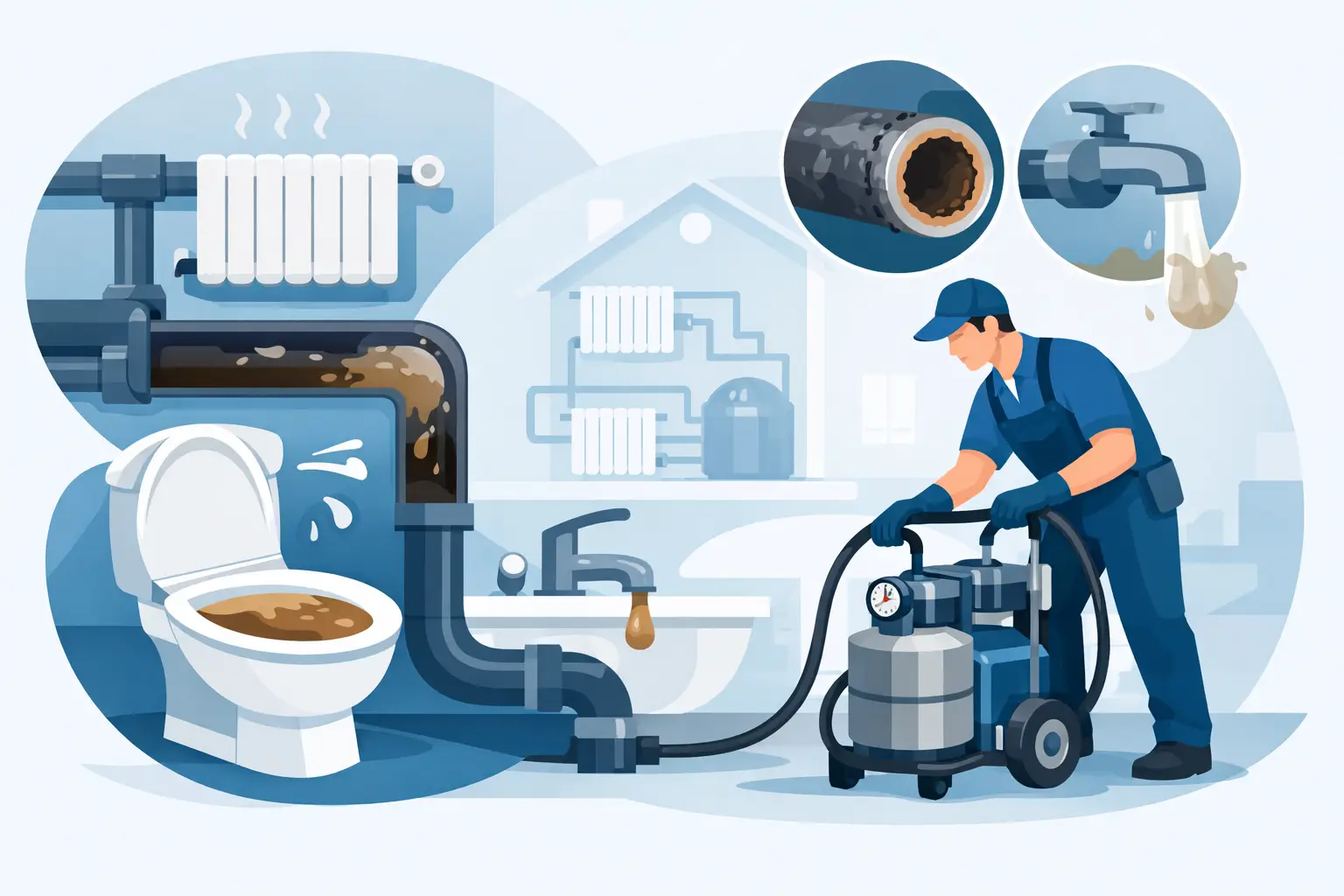
7 Signs You Need a Power Flush
If your heating is on but one radiator stays stubbornly cold at the bottom, that is often one of the first signs you need a power flush. Many Essex homeowners put up with patchy heat for months, assuming the boiler is simply getting older. In reality, sludge, rust and debris inside the central heating system can quietly build up over time and stop hot water circulating properly.
A power flush is designed to clear that build-up from your radiators, pipework and boiler circuit. It is not the right answer for every heating fault, but when internal contamination is the issue, it can make a noticeable difference to warmth, efficiency and reliability. The key is knowing when poor performance points to sludge rather than a separate mechanical problem.
What a power flush actually does
A power flush uses specialist equipment to push cleaning chemicals and water through your heating system at speed. The aim is to dislodge and remove magnetite sludge, corrosion debris and other deposits that collect inside radiators and pipework.
That matters because central heating systems are closed systems. Once corrosion starts inside, the debris has nowhere useful to go. It circulates, settles in low points, blocks narrow passages and puts extra strain on components. Left alone, the problem can move from mild inconvenience to expensive repair work.
A proper assessment always comes first. Some systems benefit from a full power flush, while others may only need a targeted clean, a filter check or a repair to a faulty valve or pump. A good engineer should tell you which is actually needed, rather than recommending the biggest job by default.
7 signs you need a power flush
1. Radiators are cold at the bottom
This is one of the clearest warning signs. If the top of the radiator gets hot but the bottom stays cool, sludge is often sitting in the base and stopping heat from spreading evenly.
People sometimes confuse this with trapped air. Air usually causes a radiator to go cold at the top, not the bottom. If you have already bled the radiator and the problem keeps coming back, sludge is much more likely.
2. Some radiators take far longer to heat up than others
In a healthy system, radiators should warm up in a fairly consistent way once the heating is on. If one room gets hot quickly while another stays lukewarm for ages, circulation may be restricted.
There can be other causes, including balancing issues or faulty thermostatic radiator valves, so it is not always a flushing problem. But when several radiators are slow or uneven, internal build-up is a common reason.
3. Your boiler is making unusual noises
Boilers should make some operational noise, but banging, kettling, rumbling or vibrating sounds are not something to ignore. Debris in the system can restrict water flow and cause overheating in parts of the boiler, especially the heat exchanger.
That extra strain can affect both performance and lifespan. If your boiler has become noticeably noisier and your heating is also underperforming, it is worth having the system checked before the issue develops into a breakdown.
4. You keep needing to bleed the radiators
Occasional bleeding is normal. Constant bleeding is not. If radiators repeatedly fill with air, corrosion may be taking place inside the system.
As metal components corrode, sludge forms and gases can be produced. That can leave you in a cycle of bleeding radiators, topping pressure back up and still not getting reliable heat. A power flush may help if contamination is the root cause, though the engineer should also check for leaks and failing components.
5. The heating pump is noisy or struggling
A central heating pump has a simple but important job – moving hot water around the system. If sludge starts to clog the pipework or collect around the pump, circulation becomes harder. You may hear humming, grinding or changes in pitch as the pump works harder than it should.
Sometimes the pump itself is worn and needs replacing. Sometimes the pump is fine but the system around it is dirty. The difference matters, because replacing parts without cleaning the system can mean the same problem returns.
6. Radiators need frequent rebalancing
If rooms never seem to stay at a consistent temperature and radiator performance changes from one month to the next, your system may not just be out of balance. Sludge build-up can alter flow rates across the network and make previous adjustments less effective.
Balancing helps when the system is fundamentally clean and healthy. It is less effective when blockages are developing. If rebalancing has been tried and the results do not last, a deeper clean may be needed.
7. Your energy bills are creeping up without a clear reason
When a heating system is partially blocked, it has to work harder and run longer to deliver the same comfort level. That can push up fuel use, even if your daily routine has not changed much.
Of course, energy costs rise for plenty of reasons, and a power flush is not a magic fix for every high bill. But if your home feels less comfortable while the boiler seems to be running more often, poor system efficiency could be part of the problem.
When these signs point to something else
Not every heating issue means you need a flush. A cold radiator could be caused by a stuck valve. Poor heat output might come from an undersized radiator, a failing pump or a boiler fault. Noisy pipework can sometimes be linked to pressure, air or installation issues rather than sludge alone.
That is why diagnosis matters. A trustworthy heating engineer should inspect the system properly, test circulation, look at water quality and explain what they have found in plain terms. If a power flush is recommended, you should know why. If it is not the best option, you should hear that too.
Is a power flush always worth it?
It depends on the age and condition of the system, the severity of the build-up and what you are trying to achieve. In many homes, a power flush improves radiator performance, reduces cold spots and helps the boiler operate more efficiently. It is also commonly recommended before fitting a new boiler, because connecting a new appliance to a dirty system can lead to problems quickly.
That said, very old systems with fragile components need careful assessment. In some cases, existing weaknesses only become obvious once circulation improves. That does not mean flushing is wrong, but it does mean the work should be approached professionally and with the right expectations.
How to help prevent sludge returning
Once a system has been cleaned, it makes sense to protect it. Inhibitor chemicals help reduce future corrosion, and a magnetic filter can capture debris before it circulates back through the boiler and radiators.
Regular boiler servicing matters as well. A service is not just about the boiler itself. It is also a chance to spot changes in system performance early, before they turn into bigger faults. For homeowners and landlords alike, prevention is usually cheaper than repeated repairs.
When to book an inspection
If you have noticed one or two of these symptoms, it is worth keeping an eye on them. If you are dealing with several at once – cold radiator bottoms, noisy boiler operation, repeated bleeding and poor heating performance – it is sensible to get the system checked sooner rather than later.
A professional inspection gives you a clearer picture of what is happening inside the system and what level of work is actually needed. At Blue Flow Heating, the focus is always on honest advice, clear pricing and practical solutions that suit the condition of the property, not a one-size-fits-all recommendation.
Heating problems rarely improve by being ignored. If your system is showing the signs you need a power flush, acting early can mean a warmer home, fewer breakdowns and less wasted money over time.