
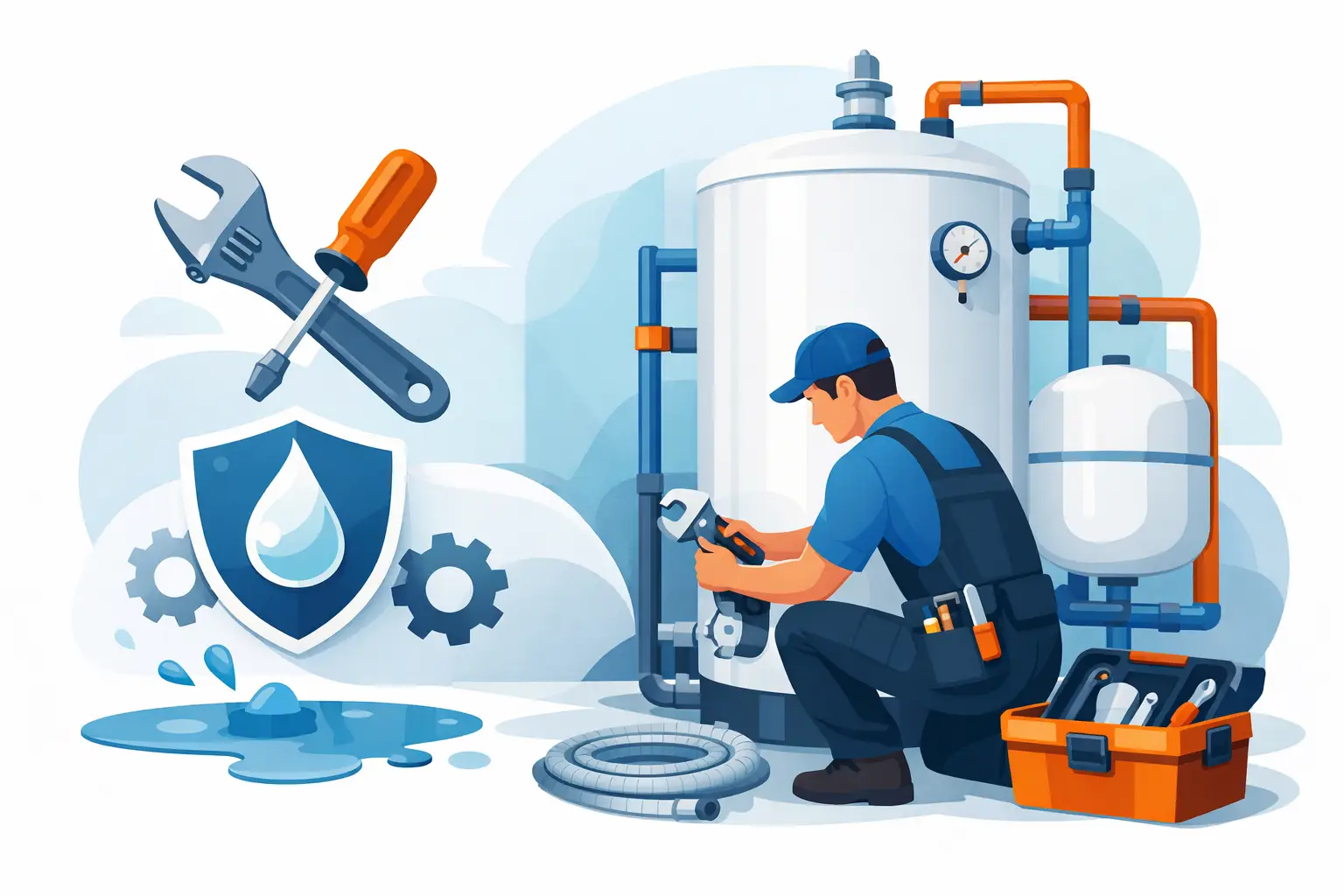
Unvented Hot Water Cylinder Repair
When an unvented cylinder starts playing up, it rarely stays a small problem for long. You might notice the hot water turning lukewarm halfway through a shower, pressure dropping at the taps, or water appearing somewhere it should not. Unvented hot water cylinder repair is not a job to put off, because these systems work under mains pressure and rely on several safety controls all doing their job properly.
For homeowners and landlords, that matters for two reasons. First, comfort – nobody wants unreliable hot water in a busy household. Second, safety – unlike a standard vented setup, an unvented cylinder has built-in components designed to control temperature and pressure. If one of those parts fails, the system needs proper diagnosis and a qualified repair, not guesswork.
What makes unvented cylinders different
An unvented hot water cylinder stores mains pressure hot water directly, which is why it can give strong performance at showers and taps without needing a loft tank. That convenience is one of the main reasons these systems are popular in modern homes, extensions and renovated properties.
The trade-off is that they are more specialised. Expansion vessels, pressure reducing valves, tundishes, temperature and pressure relief valves, thermostats and immersion heaters all have a role to play. If one part is not operating correctly, the symptoms can overlap. A dripping pipe might point to a pressure issue, but it could also be linked to expansion problems, overheating or a failing valve.
That is why unvented systems must be worked on by someone with the right qualification and experience. In practical terms, repair work is about more than stopping a leak or swapping a part. It is about making sure the full system remains safe, compliant and reliable.
Common signs you may need unvented hot water cylinder repair
Some faults are obvious. Others are easy to ignore until they become disruptive.
If you have no hot water at all, the cause may be an immersion heater issue, a failed thermostat, a motorised valve problem or a fault linked to the boiler or controls. If the water is hot one day and poor the next, that points more towards an intermittent component or control issue.
A discharge pipe dripping outside, or water passing through the tundish inside, should never be dismissed as normal. It is a sign that the system is relieving pressure or temperature for a reason. Sometimes the fix is relatively straightforward, such as replacing a faulty expansion vessel or recharging it. Sometimes the underlying issue is more involved.
Reduced flow at hot taps can also indicate trouble. Because unvented cylinders rely on balanced pressure, restrictions in valves, strainers or pipework can affect performance. In homes with hard water, scale can add another layer to the problem, particularly around immersion elements and internal components.
Strange noises are another clue. Rumbling, banging or hissing may be linked to scale build-up, overheating or pressure irregularities. Even if the system still seems to work, those noises are worth investigating early before they lead to bigger repair costs.
Why DIY is the wrong approach
There is a difference between noticing a problem and attempting to fix it yourself. With an unvented system, that line matters.
These cylinders are controlled by safety devices that prevent dangerous pressure and temperature conditions. Interfering with valves or disconnecting parts without the right training can make the system unsafe. It can also lead to water damage, invalidated warranties or further faults that are more expensive to sort out later.
For landlords, there is an added responsibility to keep hot water systems in safe working order. For homeowners, the same principle applies even without the legal angle – if the repair affects safety, compliance has to come first.
How a proper repair should be approached
Good repair work starts with diagnosis, not assumptions. A qualified engineer should inspect the cylinder, its controls, the discharge arrangement and the connected heating components before recommending any work.
That process may include checking incoming mains pressure, testing thermostats and immersions, inspecting expansion vessels, examining valves for passing or failure, and identifying whether the fault is actually in the cylinder or elsewhere in the heating system. In some homes, what looks like a cylinder fault turns out to be a control issue or a boiler-side problem.
Once the cause is confirmed, the repair should be explained clearly. That means what has failed, why it matters, what needs replacing or resetting, and whether there are any wider concerns to keep an eye on. Transparent advice matters because not every repair carries the same value. Replacing a valve on a well-maintained cylinder can make complete sense. Spending heavily on repeated faults in an ageing unit may not.
Typical faults and what they often mean
Leaking from the tundish or discharge pipe
This usually means the system is releasing excess pressure or heat. The cause might be a failed expansion vessel, a worn pressure relief valve, excessive incoming mains pressure or a thermostat issue. The visible leak is the symptom, not the diagnosis.
No hot water from the cylinder
If your cylinder is heated by a boiler, the problem could involve motorised valves, programmers, thermostats or circulation to the coil. If it uses an immersion heater, the element or thermostat may have failed. A proper test is the only way to avoid replacing the wrong part.
Inconsistent water temperature
This can happen when thermostats are not controlling correctly, scale is affecting components, or heating controls are behaving unpredictably. It may also point to stored water not reaching proper temperature in the first place.
Low hot water pressure
Restrictions, faulty pressure reducing valves, blocked strainers or scaling can all affect flow. If cold pressure seems fine but hot outlets are poor, that helps narrow the search.
Repair or replacement – when does it make sense?
This is where honesty matters. Not every faulty cylinder needs replacing, and not every repair is the sensible long-term option.
If the cylinder is relatively modern and the fault sits with a serviceable component such as an expansion vessel, valve, immersion or thermostat, repair is often the best route. It is faster, less disruptive and usually more cost-effective.
If the unit is older, parts are repeatedly failing, or there is corrosion around the cylinder body itself, replacement can be the smarter investment. The same applies if the system has been poorly maintained and several safety components are now in questionable condition. In that case, patching one issue may only delay the next.
A trustworthy engineer will talk you through that balance rather than pushing one answer every time. For many households in Essex, the right decision comes down to age, reliability, repair history and how long you plan to stay in the property.
Why annual servicing helps prevent major repairs
Many unvented cylinder faults do not appear overnight. Pressure changes, expansion vessel issues, scale build-up and valve wear can develop gradually. Annual servicing gives those components a chance to be checked before they fail at the worst possible time.
That matters even more in family homes where demand is high, or in rental properties where a loss of hot water quickly becomes urgent. Routine maintenance can often catch a minor issue before it leads to emergency call-outs, water damage or a full loss of service.
Servicing is also the right time to check that discharge arrangements remain safe and that safety devices are operating as intended. It is not just about efficiency. It is about protecting the household and the property.
Choosing the right engineer for unvented cylinder work
When you need unvented hot water cylinder repair, qualifications and experience should come before price alone. A low quote means very little if the fault is misdiagnosed or the safety side is overlooked.
Look for an engineer who is properly qualified to work on unvented systems, explains findings in plain English and is clear about costs before work begins. Good service also shows in the basics – turning up when promised, working tidily and giving practical advice without unnecessary pressure.
That is the standard we believe domestic customers should expect. At Blue Flow Heating, the focus is on transparent pricing, reliable workmanship and repairs that solve the actual problem rather than just the visible symptom.
What to do if you suspect a fault
If you notice leaking, pressure problems, inconsistent hot water or unusual discharge from the system, act early. Turning a blind eye can mean more disruption later, especially if the issue worsens into a complete hot water failure.
Make a note of what you have seen – whether the leak is constant or occasional, whether the problem affects all taps, and whether the boiler and controls seem to be working normally. That information can help an engineer diagnose the issue more efficiently when they attend.
Most importantly, do not tamper with the safety controls yourself. The safest route is to have the system checked properly, get clear advice, and deal with the fault before it becomes a bigger and more expensive problem. A reliable hot water system should give you confidence every day, not another item on the worry list.