
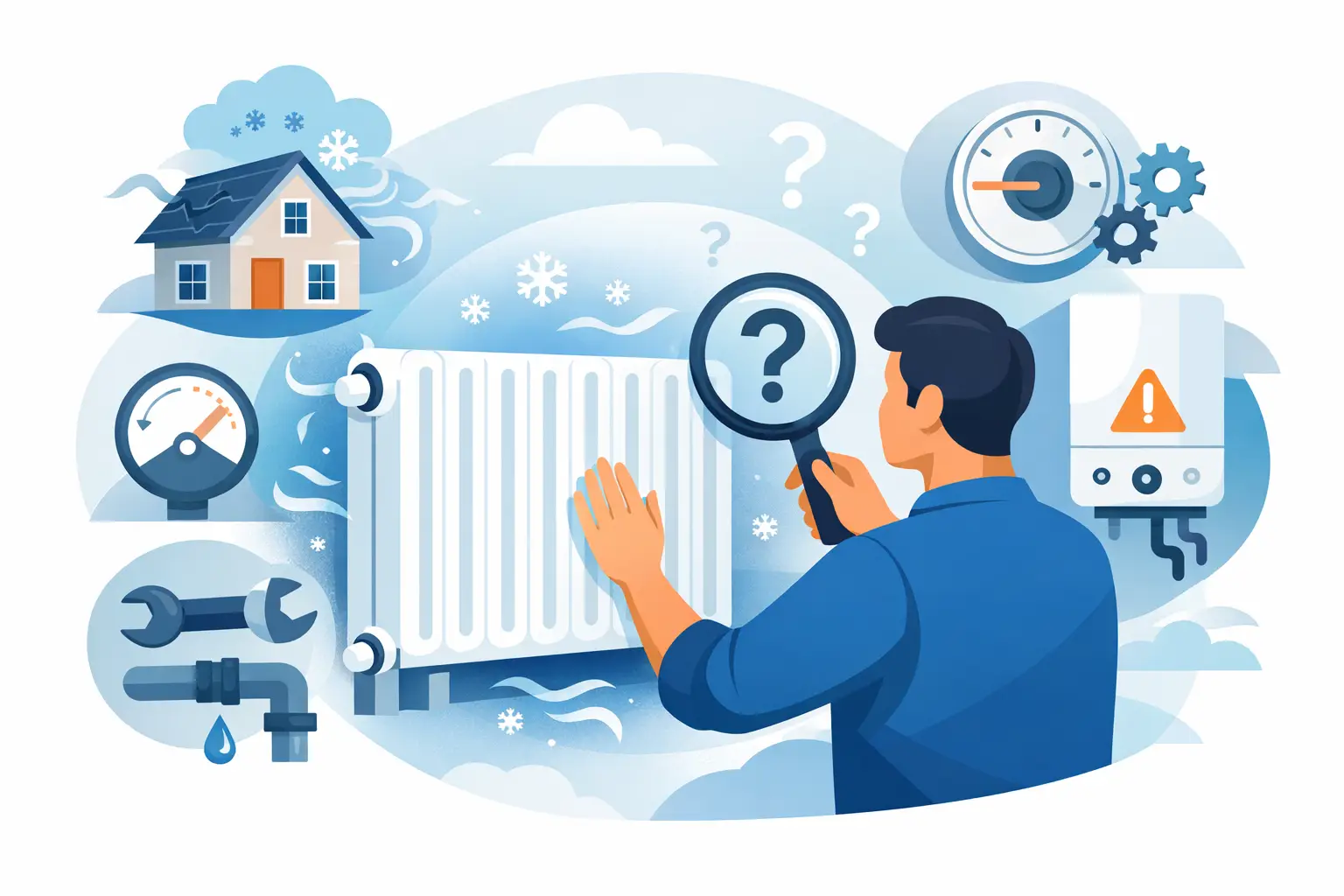
Why Are My Radiators Cold? Common Causes
You turn the heating on, wait for the house to warm up, and then notice one radiator is cold while the others are working – or worse, they all stay stubbornly cool. If you are asking, why are my radiators cold, the answer is usually linked to trapped air, poor circulation, low system pressure, a faulty valve, or sludge inside the system.
Some causes are simple to spot and safe to check yourself. Others point to a wider heating problem that needs professional attention, especially if the issue keeps coming back. The key is not to ignore it. Cold radiators are not just frustrating – they can mean wasted energy, uneven heating, and extra strain on your boiler and central heating system.
Why are my radiators cold in certain rooms?
If some rooms are warm and others are not, the problem is often localised rather than system-wide. That usually narrows it down to the individual radiator, its valves, or the balance of the system.
A radiator that is cold at the top but warm at the bottom usually has air trapped inside. Air rises, so it collects in the upper part of the radiator and stops hot water from filling the whole panel. In many homes, bleeding the radiator solves this quickly.
If the radiator is warm at the top but cold at the bottom, sludge is a more likely cause. Over time, rust, debris, and dirty water settle in the bottom of the radiator. This blocks proper flow and reduces heat output. In older heating systems, this is especially common.
If the radiator is completely cold, but nearby radiators are heating normally, the issue may be a stuck thermostatic radiator valve, a closed lockshield valve, or poor balancing across the system. In plain terms, hot water is not being directed where it should be.
Common reasons radiators stay cold
Trapped air in the radiator
This is one of the most common heating issues in domestic properties. If air has built up inside the radiator, hot water cannot circulate properly. You may also hear gurgling or bubbling noises when the heating is on.
Bleeding the radiator can often release the trapped air. You will need a radiator key or suitable tool, a cloth, and a bit of care. Turn the heating off first, let the system cool slightly, and open the bleed valve slowly until the trapped air escapes. Once water starts to come through, close it again.
If you need to bleed radiators regularly, that points to an underlying problem. Air does not keep appearing for no reason, so it is worth having the wider system checked.
Low boiler pressure
If several radiators are not heating properly, low system pressure may be the issue. Most modern combi and sealed heating systems rely on the correct pressure to circulate water effectively.
You can usually check the pressure gauge on the boiler. Many systems should sit around 1 to 1.5 bar when cold, though it depends on the manufacturer and setup. If the pressure is too low, the radiators may struggle to heat fully.
Topping up pressure is sometimes straightforward, but only if you know your boiler and filling loop arrangement. If pressure keeps dropping, that is not normal. It could mean a leak, a faulty expansion vessel, or another issue that needs proper diagnosis.
Sludge and poor circulation
If your radiators are patchy, slow to warm up, or cold at the bottom, sludge may be restricting flow. This build-up forms gradually, so many homeowners do not notice the problem until heating performance has clearly dropped.
A single affected radiator can sometimes be removed and flushed through. But if multiple radiators are showing the same symptoms, the system may need a proper clean, such as a powerflush or a chemical flush, depending on its condition. There is no one-size-fits-all answer here. A heavily sludged older system needs a different approach from a newer installation with mild contamination.
Stuck radiator valves
Thermostatic radiator valves can stick, especially after sitting unused through warmer months. If the valve pin is jammed in the closed position, hot water will not enter the radiator even though the heating is on.
This can sometimes be freed carefully, but forcing it can cause damage or a leak. If a valve is faulty, seized, or corroded, replacement is usually the best long-term option.
An unbalanced heating system
When a system is out of balance, hot water reaches some radiators much more easily than others. The ones nearest the boiler may get hot first and stay hot, while those further away remain lukewarm or cold.
Balancing adjusts the flow through each radiator so the whole property heats more evenly. It sounds simple, but it needs a methodical approach. Done properly, it improves comfort and can help the system run more efficiently.
What you can safely check yourself
If you are wondering why are my radiators cold, there are a few basic checks you can make before booking an engineer.
Start by checking whether the heating is actually calling for heat. Make sure the thermostat is turned up, the programmer is set correctly, and the boiler is running as expected. It sounds obvious, but control settings cause more confusion than many people realise.
Next, feel the radiator carefully. Is it cold all over, cold at the top, or cold at the bottom? That heat pattern gives a useful clue about what is going on.
Check the boiler pressure gauge if you have a sealed system. If it is noticeably low, that may explain poor performance across several radiators.
You can also make sure the thermostatic radiator valve is set to a suitable level. Sometimes a valve has simply been turned down without anyone noticing.
If one radiator needs bleeding and everything else is working normally, that may be a reasonable DIY job. Beyond that, it is usually better not to experiment. Opening the wrong valve, over-pressurising the system, or forcing seized parts can turn a small problem into a repair bill.
When cold radiators point to a bigger problem
Sometimes the radiator is not really the problem at all. It is just where the issue shows up first.
If none of your radiators are heating, the boiler may not be firing correctly, the pump may have failed, or the controls may not be communicating properly. If you have hot water but no heating, that can point to a motorised valve, pump, thermostat, or programmer fault.
In older properties, repeated cold spots can also signal that the system has not been maintained properly for some time. Corrosion, internal blockages, ageing valves, and inefficient circulation often build up gradually. That is why a recurring radiator issue is worth treating seriously rather than just patching over it each winter.
For landlords, there is also a practical responsibility to act promptly. Poor heating affects tenant comfort, can contribute to damp and condensation problems, and may lead to complaints that are far easier to prevent than resolve later.
Why professional diagnosis saves time
Heating faults can overlap. A radiator may have trapped air, but the reason air keeps entering the system could be low pressure or a hidden leak. A cold radiator may look like a valve issue, but the real cause could be sludge across the wider system.
That is why guessing can be expensive. A proper heating engineer will look at the full picture – boiler pressure, pump performance, valve operation, system cleanliness, and overall circulation – rather than just the cold radiator itself.
For homeowners in Essex, that kind of clear diagnosis matters. You want the fault identified properly, the pricing explained clearly, and the work completed without mess or unnecessary upselling. At Blue Flow Heating, that is the standard we believe local customers should expect from their heating engineer.
How to stop the problem coming back
Once your radiators are heating properly again, prevention matters. Regular boiler servicing helps spot pressure issues, failing components, and circulation problems before they become bigger faults. If your system is prone to sludge, cleaning it and protecting it with inhibitor can make a real difference.
It is also worth paying attention to small warning signs. Radiators taking longer to heat, strange noises, pressure drops, and cold patches rarely fix themselves. Acting early is usually cheaper, simpler, and less disruptive.
If your system is older, recurring radiator problems can be a sign that selective repairs are no longer the most cost-effective route. Sometimes replacing valves, improving filtration, or upgrading parts of the heating system gives better long-term value than repeated callouts.
A cold radiator does not always mean a major repair, but it does mean something is not working as it should. The right fix depends on whether the cause is air, sludge, pressure, valves, or a wider system fault. A quick check can help you narrow it down, but if the issue persists, getting it looked at properly is the best way to restore reliable heating and keep your home comfortable when you need it most.