
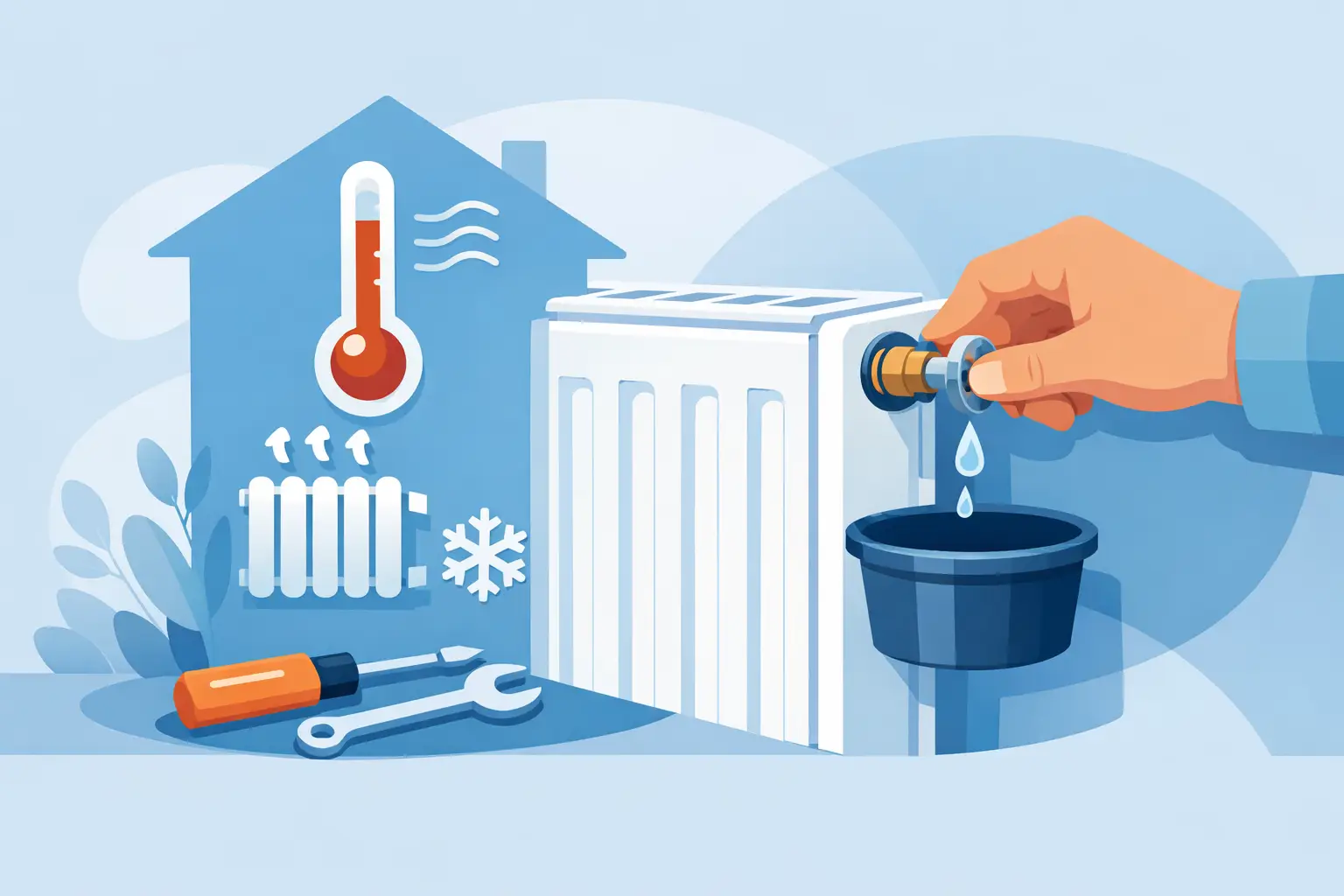
How to Bleed Radiators Correctly
When one radiator stays cold at the top while the rest of the house struggles to warm up, the problem is often trapped air rather than a major heating fault. Knowing how to bleed radiators correctly can make your system heat more evenly, reduce wasted energy, and help your home feel comfortable again without much fuss.
Why radiators need bleeding
Radiators work by circulating hot water through a sealed heating system. Over time, air can build up inside them and collect near the top. When that happens, hot water cannot fill the radiator properly, so you get cold patches, slow warm-up times, and rooms that never quite reach the temperature you expect.
You might also hear gurgling or bubbling sounds from the pipework, especially after the heating comes on. In many homes, these are the first signs that air is trapped in the system. Bleeding the radiator releases that air so hot water can circulate as intended.
That said, not every cold radiator simply needs bleeding. If it is cold at the bottom rather than the top, sludge or debris may be restricting flow. If several radiators are affected, the issue could be balancing, pressure loss, or a wider central heating fault. It depends on the pattern you are seeing.
Signs you need to bleed a radiator
The clearest sign is a radiator that is warm at the bottom and cool at the top. You may also notice that one room feels noticeably colder than the rest, even when the thermostat is set as normal.
Other common signs include strange noises in the heating system, radiators taking longer than usual to heat up, or higher energy use because the boiler is working harder to achieve the same result. For landlords, these small issues can turn into tenant complaints surprisingly quickly during colder months.
If your boiler pressure drops regularly or you have to bleed radiators often, it is worth looking beyond the radiator itself. Repeated air build-up can point to an underlying issue that should be checked properly.
What you need before you start
Bleeding a radiator is usually a straightforward household task, but it pays to do it carefully. You will need a radiator bleed key for most standard radiators, although some modern models use a flat-head screwdriver instead. Keep a dry cloth and a small container or towel ready to catch any drips.
It is also sensible to wear old clothes and have a look at the condition of the bleed valve before you begin. If the valve looks damaged, heavily painted over, or corroded, forcing it can create a bigger problem than the one you started with.
How to bleed radiators correctly step by step
Turn the heating off first
Before you do anything else, switch the central heating off and let the system cool down. This matters for two reasons. First, it is safer. Second, if the pump is running while you bleed the radiator, it can keep moving water and air around the system, which makes the job less accurate.
Give the radiators enough time to cool so you can touch them safely. Warm is one thing. Hot enough to scald is another.
Identify which radiators need attention
Walk around the property and check each radiator by hand. If the top section feels cooler than the bottom, that radiator is a likely candidate for bleeding. If more than one is affected, start downstairs and work your way up, especially in a two-storey home where air often rises to higher points in the system.
Place a cloth under the bleed valve
The bleed valve is normally at the top corner of the radiator, opposite the thermostatic or manual valve. Put your cloth or small container underneath it before opening anything. Even when only air is trapped, a small amount of water usually follows.
Open the valve slowly
Insert the bleed key and turn it anti-clockwise very slightly – usually no more than a quarter turn. You should hear a hissing sound as trapped air escapes. There is no need to open it fully. A gentle, controlled turn is enough.
Keep the valve open until the hissing stops and a steady trickle of water appears. That is your sign that the air has been released.
Close the valve firmly, not forcefully
Once water starts to come through consistently, turn the key clockwise to close the valve again. It should be snug, but not overtightened. Too much force can damage the valve or make it harder to open next time.
Wipe away any drips and check that the valve is dry. If water continues to seep out afterwards, the valve may not be seated properly or the fitting may be worn.
Check the boiler pressure afterwards
After bleeding one or more radiators, check your boiler pressure gauge. Releasing air can lower system pressure, particularly if you have bled several radiators. On many domestic systems, the pressure should sit around 1 to 1.5 bar when the heating is off, although you should always follow the boiler manufacturer guidance.
If the pressure is too low, you may need to top the system up using the filling loop. This part can vary between boilers, so if you are not confident, it is better to pause than guess. Over-pressurising the system can cause its own problems.
Once the pressure is correct, turn the heating back on and test the radiators again. They should heat more evenly from top to bottom.
If bleeding the radiator does not solve it
This is where a lot of homeowners lose time. If you have bled the radiator properly and it is still not heating as it should, there may be another issue at play.
A radiator that stays cold at the bottom often points to sludge build-up. This is common in older systems and can reduce efficiency across the property, not just in one room. A stuck thermostatic radiator valve can also stop hot water entering the radiator at all. In some cases, the system may simply need balancing so each radiator receives the right flow of hot water.
If your boiler pressure keeps dropping, if you find yourself bleeding the same radiator repeatedly, or if several radiators remain cold despite your efforts, that is the point to bring in a qualified heating engineer. A quick check now is usually cheaper than letting a small fault turn into a breakdown later.
Common mistakes to avoid
One of the biggest mistakes is bleeding radiators while the heating is still on. It can seem quicker, but it often leads to poor results and unnecessary mess. Another is opening the valve too far. The bleed screw is small, and if it comes loose or strips, a simple maintenance job can become a repair.
People also sometimes assume all heating issues are caused by trapped air. They are not. If the radiator is stone cold all over, the valve may be shut or seized. If only certain rooms are affected, balancing could be the problem. If the system makes frequent noise after bleeding, there may be circulation issues that need proper investigation.
Finally, do not ignore signs of corrosion, leaking valves, or persistent pressure loss. These are not jobs to patch over with repeated bleeding.
How often should you bleed radiators?
For most homes, checking radiators once or twice a year is enough, usually before autumn and again during the heating season if something feels off. You do not need to bleed them on a fixed monthly schedule.
If you are doing it far more often, treat that as a warning sign rather than routine maintenance. Air should not keep building up excessively in a healthy sealed system. The cause could be as minor as a pressure issue or as significant as internal corrosion, but either way it is worth checking.
How to bleed radiators correctly in rented or managed properties
If you are a landlord, radiator bleeding is a simple maintenance point that can help prevent avoidable complaints about heating performance. It is still worth being careful about who carries it out. Tenants may be comfortable doing it themselves, but some would rather not touch the heating system at all, especially if pressure adjustment might be needed afterwards.
In managed properties, a quick heating check before winter can save a lot of inconvenience later. Good maintenance is not just about comfort. It helps protect the boiler, supports energy efficiency, and shows tenants the property is being looked after properly.
When professional help is the better option
There is nothing wrong with handling a simple radiator bleed yourself, but good judgement matters. If the valve is stuck, the radiator leaks, the pressure will not recover, or your heating is still uneven afterwards, it is sensible to stop there.
An experienced engineer can tell the difference between trapped air, sludge, valve faults, pump issues, and system balancing problems without guesswork. For Essex homeowners and landlords who want the job done cleanly and properly, that peace of mind often matters just as much as the repair itself.
A warm house should not be a mystery. If your radiators are not performing as they should, start with the simple checks, take your time, and do not be afraid to get expert help when the signs point to something more.