
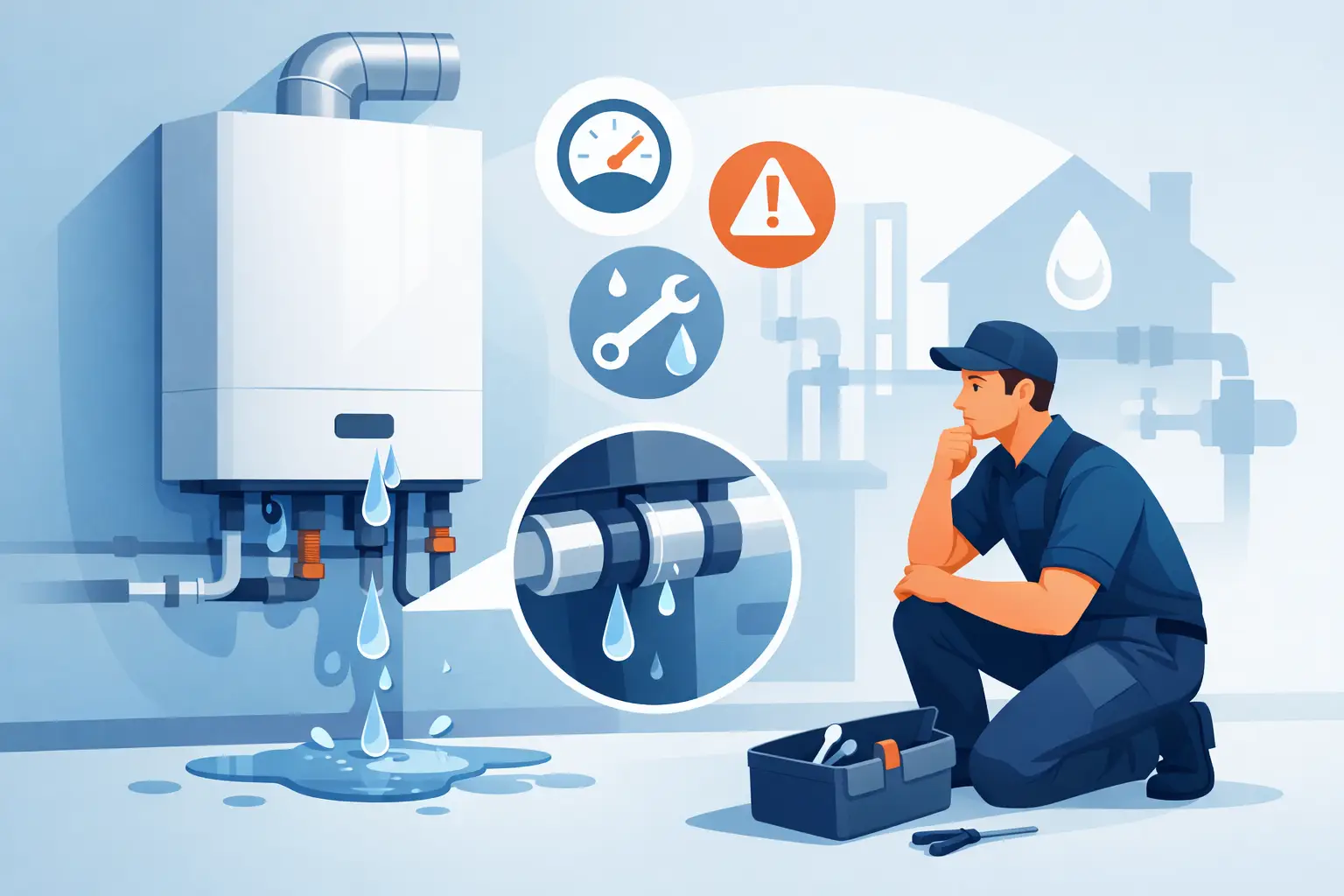
Why Is My Boiler Leaking?
A puddle under the boiler tends to stop the whole day in its tracks. If you are asking why is my boiler leaking, the short answer is that something inside the system is not sealing, draining, or handling pressure as it should. The more useful answer is that some leaks are minor and manageable in the short term, while others point to a fault that needs prompt professional attention.
A leaking boiler is never something to ignore. Even a slow drip can lead to damage around the appliance, staining, corrosion, pressure problems, and in some cases a complete loss of heating or hot water. If the leak is near electrical components, or the boiler is making unusual noises and shutting down, it is sensible to treat it as urgent.
Why is my boiler leaking? The most common causes
Most boiler leaks come down to wear, pressure issues, poor sealing, or internal component failure. The exact cause depends on the age of the boiler, the type of system, and where the water is coming from.
One common culprit is high boiler pressure. When pressure rises too far, the system may release water through the pressure relief valve to protect the boiler. You might notice dripping from an external pipe or around the discharge point. Pressure can climb if the filling loop has been left open, if a component has failed, or if the expansion vessel is no longer doing its job properly.
A worn pump seal is another regular cause, particularly in older systems. As seals age, they can harden or crack, allowing water to escape around the pump housing. In some boilers, internal seals and joints simply degrade over time through normal use.
Corrosion can also be to blame. If internal parts or pipework have started to corrode, tiny holes can form and create a slow leak. This is more likely in systems that have had poor water quality, sludge build-up, or long periods without proper servicing. Once corrosion is established, the fix can range from a straightforward component replacement to a more serious conversation about whether the boiler is nearing the end of its working life.
You may also find that the pressure relief valve itself is faulty. Even when the system pressure returns to normal, a damaged valve can continue to weep. The same goes for heat exchangers. A cracked heat exchanger is a more serious issue and usually not an economical repair on an older boiler.
Then there is the condensate pipe. On condensing boilers, this pipe carries acidic wastewater away from the appliance. If it becomes blocked, frozen, or poorly fitted, water can back up and appear as a leak. This is one of the more common reasons a boiler seems to be leaking in colder weather.
Where the leak is coming from matters
If water is dripping from underneath the boiler casing, the fault is often internal. That could mean a seal, valve, pump, or heat exchanger issue. If the leak seems to be from a pipe connection just outside the boiler, it may be a loose joint or degraded fitting rather than the boiler itself.
If you see water coming from the copper discharge pipe on the outside wall, that often points to pressure being released through the safety valve. If the pressure gauge is reading high at the same time, that gives a stronger clue.
If the leak is intermittent rather than constant, pay attention to when it happens. Does it occur only when the heating is on? Only when hot water is running? Only during freezing weather? Those details can help narrow down the fault quickly.
What you can check safely before calling an engineer
There are a few sensible checks you can make yourself, but it is important not to remove the boiler casing or attempt repairs on petrol appliances.
Start with the pressure gauge. Most domestic boilers run around 1 to 1.5 bar when cold, though the correct figure can vary slightly by model. If the pressure is much higher than normal, that could explain why water is being discharged.
Next, look at the filling loop. If it has been left open even slightly after topping up the system, it can keep feeding water in and push the pressure too high. Closing it properly may stop the problem, but if pressure keeps rising afterwards, another fault is likely present.
Check visible pipe joints and valves around the boiler for signs of dripping, green staining, or white residue. Those marks often show where water has been escaping over time. Also look outside if your boiler has a pressure relief or condensate discharge pipe. Sometimes what looks like a boiler leak is actually water escaping from there for a specific reason.
In winter, inspect the condensate pipe if it is accessible and safe to view. A frozen blockage can cause boiler lockouts and leakage symptoms. If you suspect freezing, gentle thawing methods may help, but anything beyond basic care is best left to a qualified engineer.
Place a container or towel under the leak if it is safe to do so, but avoid letting water sit near electrics. If there is any risk of water reaching wiring, switches, or the boiler’s electrical connections, switch the appliance off and seek professional help.
When a leaking boiler is an emergency
Not every leak is a full emergency, but some situations should be treated with urgency. If water is actively pouring from the boiler, if the boiler has lost all pressure and stopped working, or if you can see water near electrical parts, do not wait to see if it settles down.
The same applies if the leak is causing damage to flooring, ceilings, or nearby walls, or if the property has vulnerable occupants who rely on heating or hot water. Landlords should also act quickly, as delays can turn a repair issue into a wider property problem.
If you ever smell petrol as well as noticing a leak, that is a different level of risk. Leave the area, follow petrol emergency guidance, and arrange immediate assistance. Water leaking from a boiler and a petrol smell should never be treated as a routine callout.
Can I still use the boiler if it is leaking?
Sometimes people notice a very small drip and wonder whether they can carry on using the boiler for a few days. The honest answer is that it depends on the source and severity of the leak. A minor external seep from a compression joint is different from water escaping inside the casing.
As a rule, continued use is not worth the gamble if you do not know where the water is coming from. A small leak can worsen quickly once the system heats up and pressure changes. It can also damage components that would otherwise have been salvageable.
If the leak is clearly external, very slight, and away from electrics, an engineer may advise you over the phone on safe short-term steps until attendance. But that is not the same as assuming all leaks are harmless. Caution is the sensible approach.
Why servicing makes a difference
Leaks often appear as if they have come out of nowhere, but many start as early warning signs that go unnoticed. During a proper boiler service, an engineer can spot pressure issues, failing seals, corrosion, and poor condensate drainage before they turn into a bigger fault.
That matters for both homeowners and landlords. A boiler that is regularly maintained is less likely to suffer sudden breakdowns, and small repairs are generally easier on the budget than major component failures. It also gives you a clearer picture of whether the appliance is still worth repairing or whether replacement would offer better long-term value.
For older boilers especially, recurring leaks can be a sign that the unit is becoming unreliable. One repair may be sensible. Several repairs close together, particularly on costly internal parts, often point to a boiler that is no longer the most economical option.
What a professional will usually check
When attending a leaking boiler, a Gas Safe engineer will usually assess the pressure, inspect visible joints and valves, test key components, and trace exactly where the water is escaping from. That diagnosis matters because replacing the wrong part wastes both time and money.
A good engineer should explain the issue in plain terms, set out the recommended repair, and be clear about cost before work goes ahead. That straightforward approach is what most customers in Essex are looking for – not guesswork, not vague pricing, and not being left unsure whether the problem is actually solved.
If the boiler is older, you should also expect an honest view on whether repair is worthwhile. Sometimes a straightforward fix is all that is needed. Sometimes the fairest advice is that the boiler may be becoming unreliable and that continued repairs are only delaying replacement.
Blue Flow Heating sees this regularly in domestic properties where a small drip has been ignored until pressure loss, breakdown, or water damage follows. Acting early usually gives you more options.
A leaking boiler is frustrating, but it is also useful information. It is the system telling you something is wrong before a bigger failure arrives. If you catch it early, protect the area, and get the right diagnosis, you are far more likely to keep the repair straightforward, the cost controlled, and the disruption to your home to a minimum.