
Combi Boiler vs System Boiler: Which Fits?
If you are weighing up a combi boiler vs system boiler, the right answer usually comes down to one thing – how your household actually uses hot water. A boiler that works brilliantly in a one-bathroom home can feel underpowered in a larger property, while a bigger setup can be unnecessary expense if your demand is modest.
For most homeowners and landlords, this choice is not really about picking the “best” boiler in general. It is about finding the most suitable setup for the property, the number of bathrooms, the available space, and how many people are likely to want hot water at the same time. Get that part right, and you are far more likely to end up with reliable heating, consistent hot water and sensible running costs.
Combi boiler vs system boiler: the basic difference
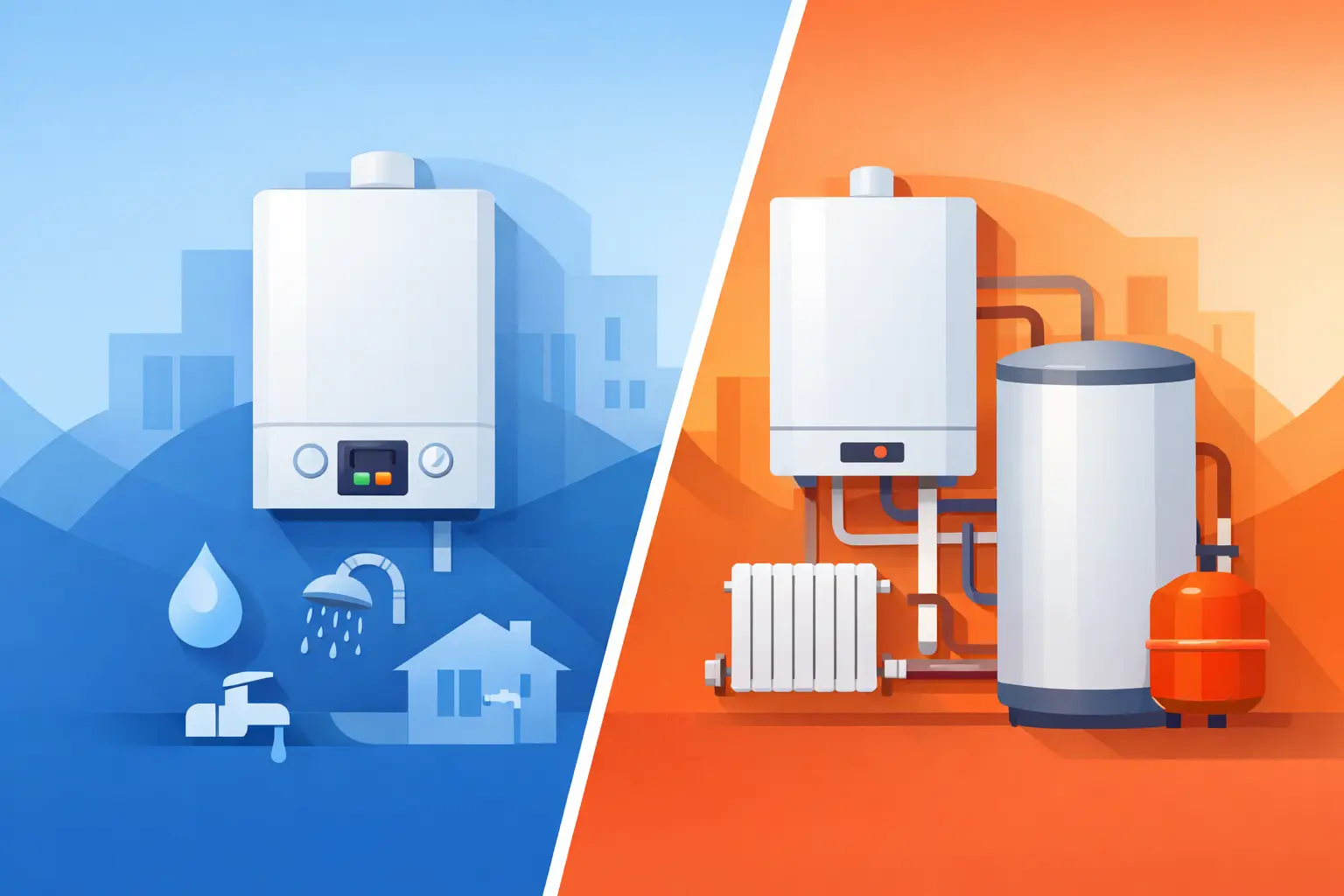
A combi boiler, short for combination boiler, heats your central heating and your hot water directly from the mains. It does not need a separate hot water cylinder because it produces hot water on demand when you turn on a tap or shower.
A system boiler also heats your radiators directly, but it stores hot water in a separate cylinder ready for use. Unlike a regular boiler, many of the main heating components are built into the unit itself, which keeps installation tidier and simpler than older conventional setups.
That single difference affects almost everything else. A combi saves space and avoids storing hot water you may not use. A system boiler is usually better at coping with higher demand, especially when more than one person is using hot water at once.
When a combi boiler makes more sense
Combi boilers are popular for good reason. In the right property, they are efficient, compact and straightforward to live with.
If you have a smaller home, one bathroom and fairly predictable hot water use, a combi is often the most practical choice. Because there is no cylinder, it suits homes where cupboard space is limited. Flats, terraces and smaller family homes often benefit from this layout.
Another advantage is that hot water is heated only when needed. That can reduce wasted energy compared with storing a full cylinder of hot water all day. For households with lower to moderate demand, that can make a real difference over time.
Combi installation can also be simpler if you are replacing an older combi or moving away from a system that no longer suits a smaller household. Fewer parts usually means less space taken up and a cleaner overall arrangement.
That said, combis do have limits. If two showers are running and someone opens the hot tap in the kitchen, the water pressure or temperature can drop. This is the point many households discover that a boiler which looks efficient on paper does not quite match real daily use.
When a system boiler is the better option
A system boiler tends to suit larger homes and busier households. If your property has more than one bathroom, or if several people regularly use hot water around the same time, stored hot water can make life much easier.
Because the hot water is kept in a cylinder, a system boiler can supply multiple outlets more effectively than most combis. That matters in family homes where one person is showering upstairs while another is running a bath or using taps elsewhere.
System boilers are also a strong option where mains water pressure is good and there is space for a cylinder. An airing cupboard or dedicated storage area can make this setup straightforward without taking over the house.
There is a trade-off, of course. Once the stored hot water has been used, you may need to wait for the cylinder to heat up again. There can also be some standing heat loss from the cylinder, though modern insulated cylinders are far better than older ones.
Still, for many properties, that compromise is worth it for the improved performance during peak times.
Space, storage and installation practicalities
Space often decides this question before performance does. A combi boiler is usually the easier answer where every cupboard counts. Without a cylinder or loft tank, it keeps the system more compact and frees up storage.
A system boiler needs room for the hot water cylinder, but it does not require a cold water tank in the loft like some older conventional systems. That makes it a good middle ground for homeowners who need stronger hot water performance without the full complexity of a traditional tank-fed arrangement.
Installation cost depends on what is already in place. Swapping a combi for another combi is often simpler than converting from one system type to another. Likewise, replacing an existing system boiler with a similar setup may avoid larger changes to pipework and controls.
If you are renovating, extending or rethinking the layout of the home, this is the point where professional advice matters. The cheapest installation is not always the best long-term value if the boiler type does not suit the property.
Running costs and efficiency
People often assume one option is always cheaper to run, but it is not that simple. Running costs depend on the boiler model, the controls, insulation levels, and how the household uses heating and hot water.
A combi boiler can be very efficient in homes where hot water demand is spread out and fairly light. Because water is heated as needed, there is less chance of paying to keep a full cylinder hot when no one is using it.
A system boiler can still be highly efficient, especially with modern controls and a well-insulated cylinder. In a larger household, it may actually be the more practical and cost-effective choice because it serves demand more comfortably. If a combi struggles to keep up, people often run taps longer or adjust temperature constantly, which is not exactly efficient in everyday life.
This is where honest boiler advice matters. Efficiency is not just a manufacturer figure. It is also about whether the system works well for the way the home is used.
Hot water performance matters more than brochure claims
The real test is morning demand. Think about your busiest period. If one person showers while another fills the kettle, runs the tap or uses a second bathroom, will the setup cope without frustration?
For a couple in a small house, a combi may be ideal. For a family of five with two bathrooms, a system boiler is often the safer bet. Landlords should think about occupancy too. A property that suits one tenant today may be occupied by a family later, and hot water complaints are common where the system is undersized.
This is also why boiler output matters. Not every combi performs the same, and not every system boiler is sized correctly by default. Choosing on boiler type alone is only half the job.
Which boiler is better for your home?
If your priority is saving space, keeping the system simple and supplying one bathroom reliably, a combi boiler is usually the stronger option. It is neat, efficient and well suited to smaller homes with moderate hot water demand.
If your priority is serving multiple bathrooms, coping with higher demand and providing more consistent hot water across the property, a system boiler is often the better fit. It asks for more space, but in the right home it delivers a more comfortable result.
Neither is automatically right for everyone. The best choice depends on the size of the property, the number of occupants, your water usage habits, and whether the existing setup makes a replacement more straightforward.
For Essex homeowners, it often helps to think less about the boiler itself and more about the daily routine in the house. A good installation should feel easy to live with for years, not just look good on a quote.
A sensible way to decide
If you are still stuck on the combi boiler vs system boiler question, start with three practical checks. Look at how many bathrooms the property has, how often hot water is used at the same time, and whether you have space for a cylinder.
From there, the decision usually becomes much clearer. A smaller household with one bathroom often benefits from the simplicity of a combi. A larger home with higher demand often benefits from the stability of a system boiler.
At Blue Flow Heating, we find that the best outcomes come from matching the boiler to the property properly, not pushing a one-size-fits-all answer. A reliable heating system should suit your home, your routine and your budget – and if you get those three aligned, the choice tends to take care of itself.