
Why Is My Boiler Losing Pressure?
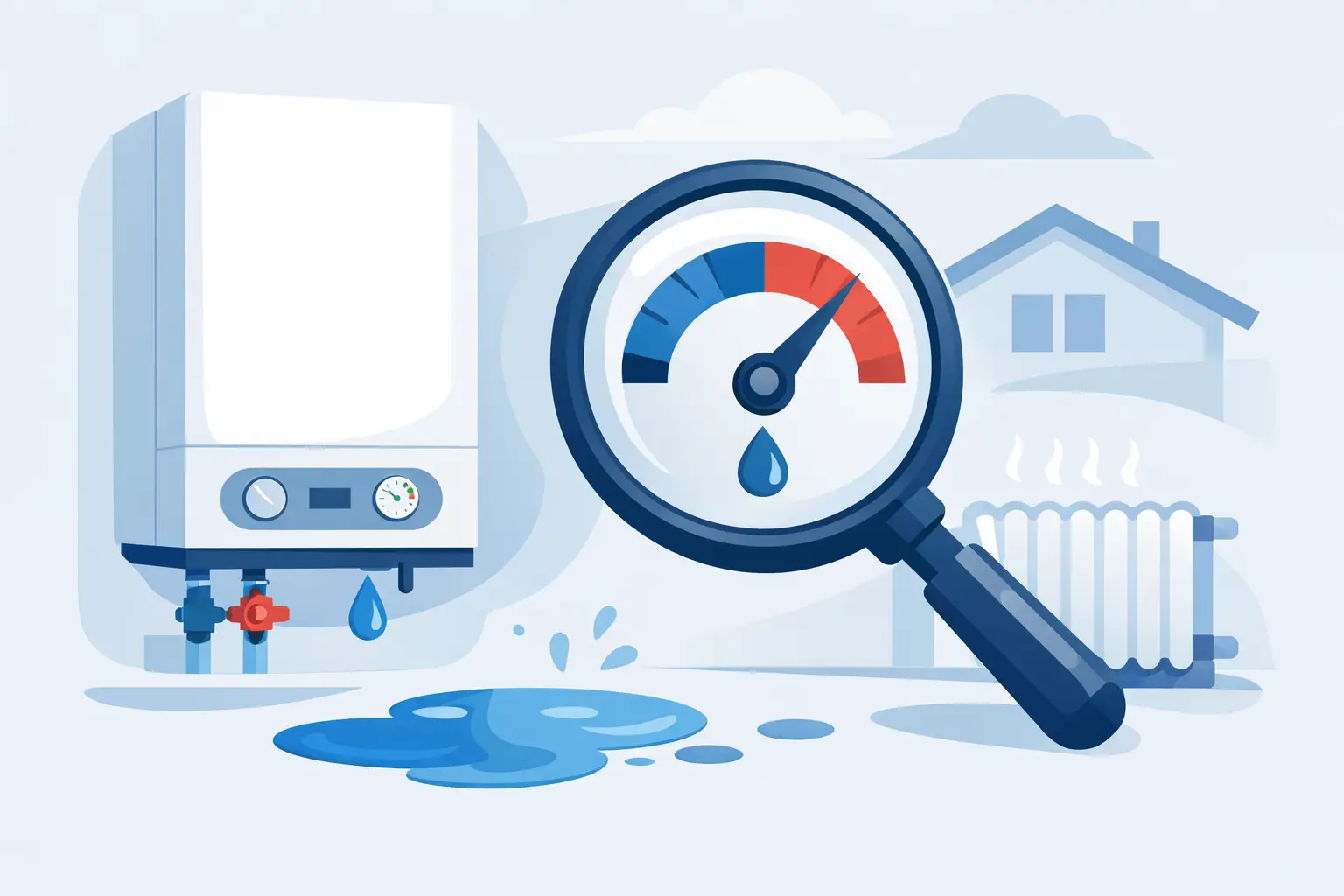
You top the boiler pressure up, the heating comes back on, and a day or two later the gauge has dropped again. If you are asking, why is my boiler losing pressure, there is usually an underlying fault rather than a one-off blip. Some causes are minor and straightforward. Others point to a leak or a failing part that needs professional attention.
A healthy boiler should hold pressure consistently when the system is working normally. Small changes between hot and cold are expected, but repeated pressure loss is not something to ignore. Left too long, it can lead to unreliable heating, boiler lockouts, and in some cases damage to components that are already under strain.
Why is my boiler losing pressure repeatedly?
In most homes, pressure drops because water is escaping somewhere from the sealed heating system, or because one of the boiler’s internal parts is no longer doing its job properly. The challenge is that the leak is not always obvious. You might see no dripping pipework, no damp patch, and no visible issue around the boiler at all.
That is why pressure problems can be frustrating for homeowners and landlords alike. The boiler may appear to work after a quick top-up, but if the pressure keeps falling, the system is telling you that something is wrong.
What boiler pressure should look like
Most domestic boilers operate at around 1 to 1.5 bar when cold, although the exact range depends on the make and model. When the heating is on, the pressure will usually rise a little. That is normal. What is not normal is a gauge that keeps heading down towards zero, or one that drops low enough for the boiler to cut out.
If you are unsure what pressure your boiler should be running at, check the manufacturer’s instructions. Many boilers also mark the ideal range directly on the gauge.
The most common reasons a boiler loses pressure
A leak somewhere in the heating system
This is one of the most common causes. Even a very small leak from a radiator valve, pipe joint, or hidden section of pipework can cause pressure to fall over time. In some cases the leak is easy to spot, such as staining beneath a radiator or water collecting near a valve. In other cases, especially where pipework runs under floors, the signs are far less obvious.
If the pressure drops gradually over days or weeks, a minor system leak is a strong possibility. If it drops quickly after topping up, the leak may be more significant.
Bleeding radiators recently
If you have bled radiators to remove trapped air, some pressure loss afterwards is perfectly normal. Releasing air from the system often means you need to top the boiler pressure back up once. What should not happen is needing to do it again and again. If that is happening, there may be another issue behind it.
A faulty pressure relief valve
The pressure relief valve is there to protect the system if pressure gets too high. When it opens, it discharges water outside through a copper pipe. If that valve becomes faulty or does not reseat properly, it can continue letting water out even when the system pressure has returned to normal.
This can be difficult to spot unless you know where the discharge pipe is. Water dripping outside from that pipe is a sign worth investigating.
Problems with the expansion vessel
The expansion vessel helps manage changes in pressure as the water heats and cools. If it loses its air charge or fails altogether, the boiler pressure can behave erratically. A common pattern is pressure rising too high when the heating is on, then dropping too low once the system cools down.
This is not a repair for a homeowner to guess at. It needs proper testing by a qualified engineer.
A leak inside the boiler
Not all leaks are visible from the outside. Internal components can leak within the casing, and the water may evaporate before it becomes obvious. That is one reason a boiler can lose pressure with no clear signs around radiators or pipework.
Because removing the boiler case involves gas safety considerations, internal checks should be left to a Gas Safe registered engineer.
Recently carried out work on the system
If you have had radiator replacement, a new valve fitted, or any work on the central heating, a pressure drop may be linked to that job. It could be as simple as air still working its way through the system, or it could point to a joint that needs tightening or resealing. Either way, it is worth checking sooner rather than later.
What you can safely check at home
Look for visible leaks
Walk around the property and check beneath radiators, around thermostatic valves, and anywhere exposed heating pipes are visible. Pay attention to small clues such as staining on skirting boards, bubbling paint, or carpet that feels slightly damp near pipe runs.
Also check around the boiler itself for signs of moisture or corrosion. You are not opening the appliance, just looking externally.
Check whether you have recently bled radiators
If you have, a single repressurisation may be all that is needed. Once topped up, keep an eye on the gauge over the next several days. If it remains stable, the issue may simply have been routine pressure loss after bleeding.
Inspect the pressure relief discharge pipe outside
Many boilers have a copper pipe that passes through the wall to the outside. If you notice dripping or regular discharge from this pipe, especially when the heating is running, that can suggest a pressure relief valve issue or over-pressurising in the system.
Repressurise only if you know how
Most modern combi boilers can be topped up using the filling loop, but it is important to follow the manufacturer’s instructions. Overfilling the system can create a different problem, and repeatedly topping up without finding the cause can mask a fault that needs repairing.
If you are not confident, it is better to ask an engineer than risk making it worse.
When boiler pressure loss is an urgent problem
Pressure loss is not always an emergency, but there are times when you should act quickly. If the boiler is cutting out regularly, if you can see water leaking, if you smell gas, or if the pressure is dropping rapidly after each top-up, the system needs prompt attention.
Landlords should be especially careful not to let an ongoing boiler issue drift. A heating fault can quickly become a tenant comfort issue, a property maintenance problem, or both.
Why topping it up again and again is not the answer
It can be tempting to keep repressurising the boiler and carry on, particularly if the heating comes back each time. The trouble is that sealed systems are meant to stay sealed. If water is constantly being lost, fresh water is constantly being introduced. Over time, that can increase corrosion inside the system and put added stress on radiators, valves, and boiler components.
So while topping up may get you through a cold evening, it should not be treated as a long-term fix.
When to call a professional
If your boiler loses pressure more than once, it is sensible to have it checked properly. An experienced engineer can test the expansion vessel, inspect the pressure relief valve, look for internal leaks, and assess whether there is a hidden issue elsewhere on the heating system.
This is where a methodical approach matters. Pressure loss can have more than one cause, and guessing usually costs more in the long run. A proper diagnosis saves time, avoids unnecessary part changes, and helps restore reliability.
For homeowners in Essex, working with a local company that communicates clearly, turns up when promised, and explains the fault in plain English makes the process much less stressful. That is exactly the standard Blue Flow Heating believes domestic customers should expect.
How to reduce the risk of future pressure problems
Regular boiler servicing helps spot early signs of wear before they turn into breakdowns. It will not prevent every leak in every system, but it does give you a better chance of catching issues such as tired seals, pressure-related faults, and poor system performance before they leave you without heating or hot water.
It also helps to deal with minor warning signs early. A single cold radiator, occasional pressure fluctuation, or small drip from a valve may not seem urgent at first, but these are often the clues that appear before a bigger failure.
If you are asking why is my boiler losing pressure, the key thing to remember is that boilers do not usually lose pressure for no reason. Sometimes the fix is quick. Sometimes it takes a deeper inspection. Either way, the sooner you deal with it, the easier it is to protect your heating, your home, and your peace of mind.