
Central Heating: What Homeowners Should Know
If your central heating is working properly, you barely think about it. You turn the thermostat up, the radiators warm through, and the house feels comfortable. When it is not working properly, though, you notice it fast – cold rooms, rising energy bills, odd noises, patchy heat, or a boiler that seems to be working harder than it should.
For homeowners and landlords, central heating is not just about comfort. It affects running costs, hot water performance, property upkeep, and in some cases safety. The challenge is that many heating issues start quietly. A radiator that takes a while to warm up or a pressure drop you keep topping up can look minor, but they often point to a system that needs proper attention.
What central heating actually does
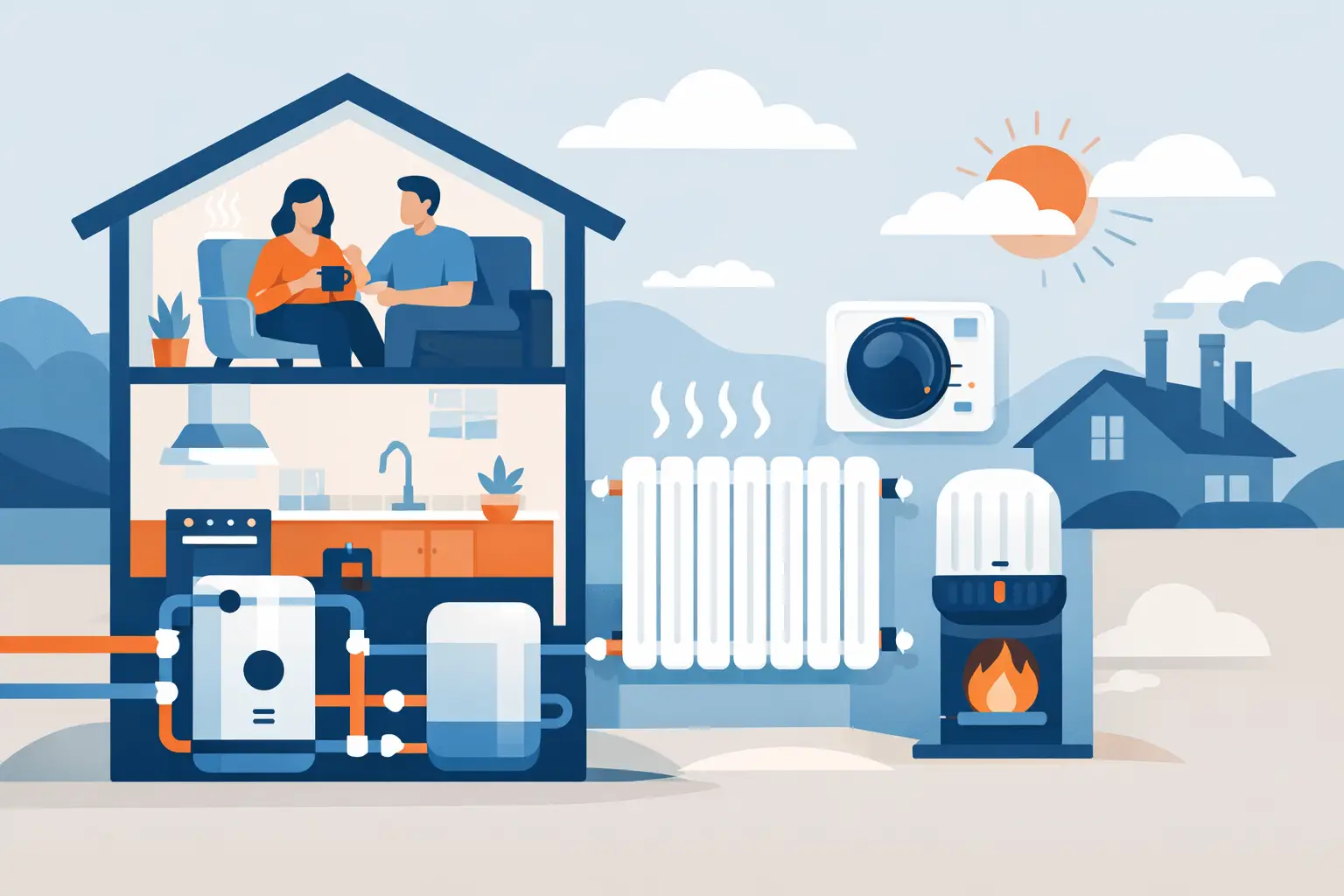
Most homes in the UK use a wet central heating system. That means a boiler heats water and pumps it through pipes to radiators around the property. In many homes, the same boiler also provides hot water, either directly or through a cylinder, depending on the setup.
The principle is simple, but the system itself has several parts that need to work together properly. The boiler, pump, controls, valves, pipework, radiators and thermostat all play a part. If one part is underperforming, the whole system can feel inefficient.
This is why heating problems are not always solved by replacing the most obvious part. A cold room is not always caused by a bad radiator. A noisy boiler is not always a boiler fault. Sometimes the issue sits in the controls, trapped air, sludge in the system, poor balancing, or ageing components elsewhere.
Common signs your central heating needs attention
A reliable heating system should warm the property evenly and respond properly to your controls. If that is not happening, there is usually a reason.
Cold spots on radiators often suggest sludge build-up. Radiators that are warm upstairs but cooler downstairs can point to circulation issues. Repeated loss of pressure may mean there is a leak somewhere, or a fault with an internal component. Banging, gurgling or kettling noises can indicate air, limescale, or restricted water flow.
Higher petrol bills without a clear reason are also worth paying attention to. If your usage habits have not changed but your costs have gone up, your central heating may be working inefficiently. That could be down to an ageing boiler, poor controls, blocked system water, or heat being lost where it should not be.
Then there are the more obvious warning signs. If the boiler keeps locking out, the thermostat does not seem accurate, or some rooms never reach a comfortable temperature, it is time to get the system checked rather than keep adjusting around the problem.
Repair, service, or replace?
This is where many people hesitate, and fairly so. Nobody wants to spend money unnecessarily, but nobody wants to throw good money after bad either.
If your system has been reliable and the issue is isolated, a repair often makes sense. A failed valve, worn pump, faulty thermostat or small component issue can usually be resolved without major work. Regular servicing also helps spot those faults before they turn into breakdowns.
If the boiler is older, breaking down more often, or parts are becoming harder to source, replacement starts to look more sensible. The same applies if your heating feels underpowered or costly to run despite repeated repairs. There is no universal cut-off point, but once repair costs begin stacking up, it is worth looking at the wider picture rather than the latest invoice alone.
For landlords, there is an added layer. Reliability matters because tenants need heating and hot water without long interruptions, and petrol appliances must be maintained safely. A system that is technically still running but regularly causes callouts may no longer be the best value choice.
Why system efficiency is about more than the boiler
People often assume efficiency begins and ends with the boiler. In reality, the wider central heating system matters just as much.
A good boiler connected to dirty system water will not perform as well as it should. Radiators full of sludge reduce heat output. Poorly balanced radiators can leave some rooms overheated and others underheated. Outdated controls can make it harder to heat the home accurately, which often leads to wasted energy.
That is why proper diagnosis matters. Sometimes the best result comes from improving the system around the boiler rather than replacing the boiler itself. Powerflushing, upgrading controls, replacing problem radiators, or correcting circulation issues can make a noticeable difference to comfort and efficiency.
There is also the question of property layout. A heating setup that worked well years ago may not suit how you use the home now. An extension, loft conversion, new bathroom or changes in occupancy can all alter heating demand. What used to feel adequate may now be stretched.
Central heating controls make a bigger difference than most people think
One of the most overlooked parts of central heating is the controls. Yet they influence both comfort and running costs every day.
If your thermostat is inaccurate or badly positioned, the boiler may switch off too soon or run longer than needed. If your programmer is outdated, you may be heating the home at the wrong times. Thermostatic radiator valves can also help fine-tune temperatures room by room, but only when they are working properly and the system has been set up correctly.
Smart controls can be a worthwhile upgrade for some households, especially where routines change week to week. They offer more flexibility and can help reduce unnecessary heating. That said, they are not a magic fix. If the underlying system is poorly maintained, adding smarter controls will not solve circulation problems, sludge, or failing components.
The best approach is practical rather than trendy. Choose controls that suit how the property is used and make sure the whole system is working as it should.
When central heating problems become urgent
Some issues can wait for a booked appointment. Others should not.
If you have no heating in winter, no hot water, signs of a leak, unusual boiler smells, or repeated shutdowns, it is worth acting quickly. The same goes for sudden pressure loss or visible water around the boiler or pipework. Small faults can escalate, especially when the system is under heavier use during colder months.
For families, vulnerable residents, and tenants, delays can be more than inconvenient. Heating is a basic part of a safe and comfortable home. Quick response matters, but so does clear communication about what has failed, what needs doing, and what it will cost.
That is one reason people look for a local heating engineer they can trust over time, not just for one emergency. A contractor who knows the property history, explains the options clearly and prices work transparently tends to save stress in the long run.
Choosing the right long-term approach
The best central heating decisions are rarely about finding the cheapest immediate option. They are about choosing what is dependable, safe and cost-effective over time.
For some households, that means keeping a well-maintained existing system in good order with regular servicing and occasional repairs. For others, it means investing in upgrades that improve efficiency and reduce the risk of breakdowns. And in some cases, particularly with older or unreliable systems, replacement is the more sensible route.
What matters most is honest assessment. You want to know whether a repair is a sound fix or a short-term patch. You want to know whether a new boiler will genuinely improve performance or whether the wider system also needs attention. And you want pricing to be clear from the start, without grey areas.
That straightforward approach is what most property owners value. Whether you are managing your family home or a rental property, central heating should not be a constant source of uncertainty. It should do its job reliably, efficiently and safely, with support available when something goes wrong.
A well-looked-after heating system does more than warm the house. It gives you one less thing to worry about when the weather turns, and that is worth more than most people realise.