Why Is My Air Conditioning Running but Not Cooling?
By Blueflow Heating Cooling & Renewables
Start with the controls and the room
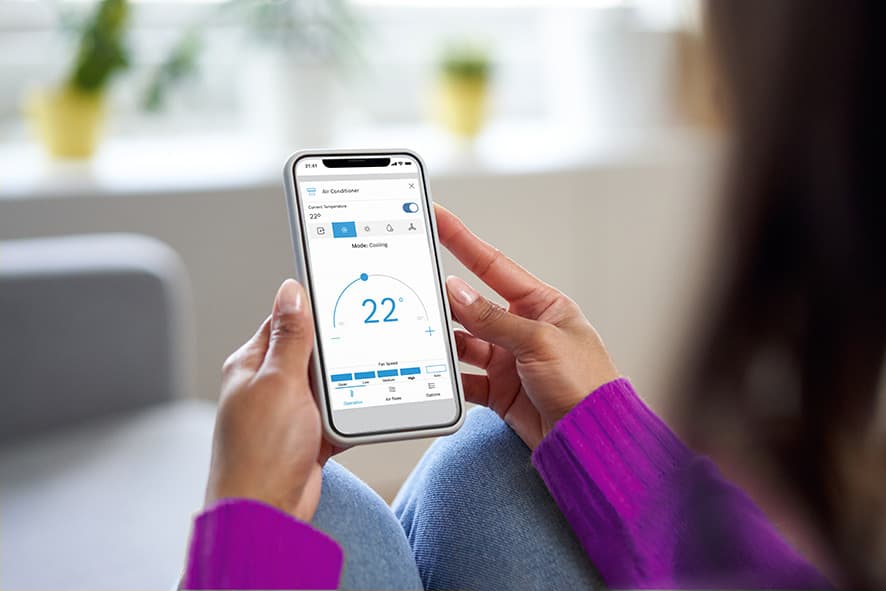
When the indoor unit is running but the room is not getting cooler, begin with the settings rather than taking the casing apart. Check that the system is set to cooling, not fan-only, dry or heating mode. Fan-only can move air around without actively cooling it, so the sound of the unit running does not necessarily mean the cooling function is operating.
Next, check the target temperature against how warm the room feels. If the target is not below the room temperature, the system may not be calling for cooling. Make sure the remote is controlling the right unit, particularly if you have more than one indoor unit. If the display shows a fault code, note it down rather than repeatedly changing settings to try to clear it.
Room conditions can affect what you notice. Sun through large windows, heat from cooking or several people in one room can add heat faster than expected. Check that doors and windows are closed and that curtains or furniture are not blocking the unit’s air outlet. These checks do not prove the system is fault-free, but they help separate a settings or room issue from a possible equipment problem.
Check airflow without opening the equipment
A restricted air path can reduce the amount of air moving through the indoor unit. Look at the visible filter and follow the manufacturer’s instructions for checking or cleaning it. Do not remove panels or reach into the equipment. If the filter is damaged, unusually dirty, or you cannot access it as described in the instructions, leave it for a technician to assess.
Also check that the indoor unit’s inlet and outlet are not obstructed. A unit needs a clear path to draw in room air and send conditioned air back into the space. If airflow seems weak even with the controls set correctly and the visible air path clear, that is useful information to pass on, but it does not identify the cause by itself. A fan, sensor or other component fault can produce similar symptoms and needs proper diagnosis.
If your system has an outdoor unit, you can look at it from a safe distance. Check for an obvious obstruction around it, but do not remove covers, touch wiring or try to clean internal parts. Keep clear if you notice damage, unusual noise or anything that looks unsafe. Avoid repeatedly switching the system on and off to test it.
Notice what the system is doing
The details of the problem can help narrow down what needs checking. Make a note of whether the indoor fan is moving air, whether that air feels different from the room, and whether the outdoor unit appears to be operating. Record when the problem occurs and whether it affects one indoor unit or more than one. If the display shows a code, take a photo of it.
A unit that runs but delivers little cooling could have an airflow restriction, a control issue or a fault elsewhere in the cooling or electrical parts. Those possibilities can overlap, so a single symptom is not enough to identify a failed part. Ice on pipework or the indoor unit, repeated electrical trips, water leaking, burning smells or unusual mechanical noise are reasons to stop using the system and seek advice rather than continue testing it.
Do not try to top up refrigerant or handle refrigerant pipework. Refrigerant work may require specialist qualifications and equipment, so leave it to a suitably qualified engineer. Our F-Gas certification is relevant where an air conditioning repair involves refrigerant, but you should leave that work to a qualified engineer.
When to book a repair
If the settings and visible airflow checks do not explain the loss of cooling, or the unit displays a fault code, arrange an inspection. Passing on the make and model, the code, what you have checked and any changes in sound or airflow gives the engineer a clearer starting point. It also helps distinguish a problem affecting one indoor unit from one affecting the wider system.
We provide air conditioning repairs across Essex, including Basildon, Chelmsford and Southend-on-Sea. For more about the service, visit our Air Conditioning Repairs page. If you are unsure whether it is safe to keep the unit running, contact us at Blueflow Heating Cooling & Renewables for advice rather than opening the equipment yourself.


